×
- Hello
- Login or Register
- Quick Links
- Live Chat
- Track Order
- Parts Availability
- RMA
- Help Center
- Contact Us
- Shop for
- Volvo Parts

My Garage
My Account
Cart
Genuine Volvo Oxygen Sensor
Oxygen O2 Sensor- Select Vehicle by Model
- Select Vehicle by VIN
Select Vehicle by Model
orMake
Model
Year
Select Vehicle by VIN
For the most accurate results, select vehicle by your VIN (Vehicle Identification Number).
85 Oxygen Sensors found
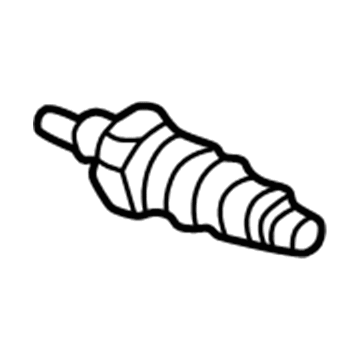
Volvo Oxygen Sensor Part Number: 9497252
$259.72 MSRP: $393.50You Save: $133.78 (34%)Ships in 1-2 Business DaysProduct Specifications- Other Name: Heated Oxygen Sensor; Air/Fuel Ratio Sensor
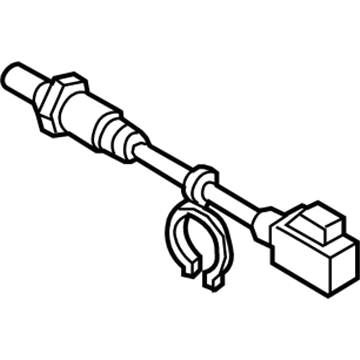
Volvo Oxygen Sensor Part Number: 9487150
$259.72 MSRP: $393.50You Save: $133.78 (34%)Ships in 1-2 Business DaysProduct Specifications- Other Name: Heated Oxygen Sensor; Wideband Air/Fuel Sensor; Front Oxygen Sensor
Volvo Oxygen Sensor Part Number: 9487147
$259.72 MSRP: $393.50You Save: $133.78 (34%)Ships in 1-2 Business DaysProduct Specifications- Other Name: Heated Oxygen Sensor; Front Oxygen Sensor

Volvo Oxygen Sensor Part Number: 9487146
$259.72 MSRP: $393.50You Save: $133.78 (34%)Ships in 1-2 Business DaysProduct Specifications- Other Name: Heated Oxygen Sensor; Rear Oxygen Sensor

Volvo Oxygen Sensor Part Number: 32360170
$259.72 MSRP: $393.50You Save: $133.78 (34%)Ships in 1-2 Business DaysProduct Specifications- Other Name: Heated Oxygen Sensor; Front Oxygen Sensor
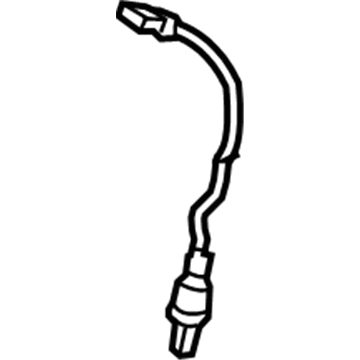

Volvo Oxygen Sensor Part Number: 32330007
$259.72 MSRP: $393.50You Save: $133.78 (34%)Ships in 1-2 Business DaysProduct Specifications- Other Name: Heated Oxygen Sensor; Front Oxygen Sensor, Rear Oxygen Sensor
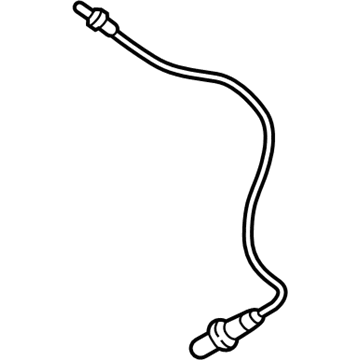
Volvo Oxygen Sensor Part Number: 32313352
$259.72 MSRP: $393.50You Save: $133.78 (34%)Ships in 1-2 Business DaysProduct Specifications- Other Name: Heated Oxygen Sensor; Rear Oxygen Sensor
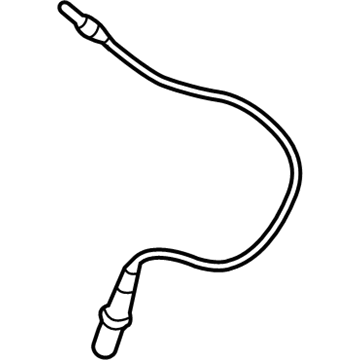
Volvo Oxygen Sensor Part Number: 32313351
$259.72 MSRP: $393.50You Save: $133.78 (34%)Ships in 1-2 Business DaysProduct Specifications- Other Name: Heated Oxygen Sensor; Center Oxygen Sensor
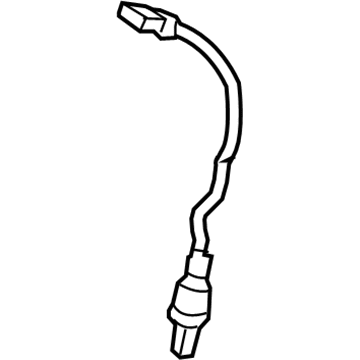
Volvo Oxygen Sensor Part Number: 32264007
$259.72 MSRP: $393.50You Save: $133.78 (34%)Ships in 1-2 Business DaysProduct Specifications- Other Name: Heated Oxygen Sensor; Rear Oxygen Sensor
Volvo Oxygen Sensor Part Number: 32255352
$259.72 MSRP: $393.50You Save: $133.78 (34%)Ships in 1-2 Business DaysProduct Specifications- Other Name: Heated Oxygen Sensor
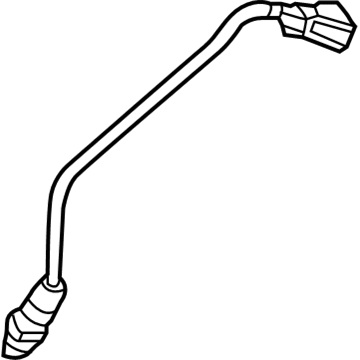
Volvo Oxygen Sensor Part Number: 32253994
$259.72 MSRP: $393.50You Save: $133.78 (34%)Ships in 1-2 Business DaysProduct Specifications- Other Name: Heated Oxygen Sensor; Front Oxygen Sensor
- Replaces: 31422059
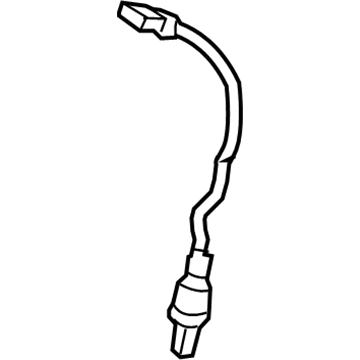
Volvo Oxygen Sensor Part Number: 32253895
$259.72 MSRP: $393.50You Save: $133.78 (34%)Ships in 1-2 Business DaysProduct Specifications- Other Name: Heated Oxygen Sensor; Rear Oxygen Sensor
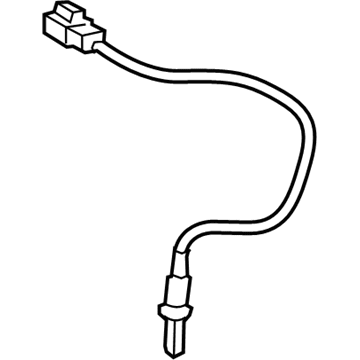
Volvo Oxygen Sensor Part Number: 32253666
$259.72 MSRP: $393.50You Save: $133.78 (34%)Ships in 1-2 Business DaysProduct Specifications- Other Name: Heated Oxygen Sensor; Front Oxygen Sensor
- Replaces: 31439621
Volvo Oxygen Sensor Part Number: 32253665
$259.72 MSRP: $393.50You Save: $133.78 (34%)Ships in 1-2 Business DaysProduct Specifications- Other Name: Heated Oxygen Sensor; Front Oxygen Sensor
- Replaces: 31293686, 31422419

Volvo Oxygen Sensor Part Number: 32253664
$259.72 MSRP: $393.50You Save: $133.78 (34%)Ships in 1-2 Business DaysProduct Specifications- Other Name: Heated Oxygen Sensor; Front Oxygen Sensor
- Replaces: 31380995
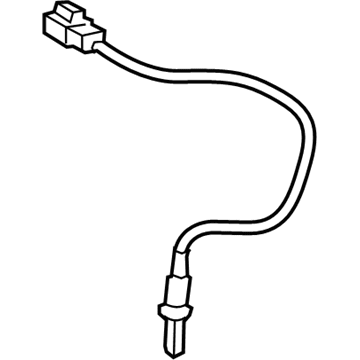
Volvo Oxygen Sensor Part Number: 32253663
$259.72 MSRP: $393.50You Save: $133.78 (34%)Ships in 1-2 Business DaysProduct Specifications- Other Name: Heated Oxygen Sensor; Front Oxygen Sensor
- Replaces: 31439480
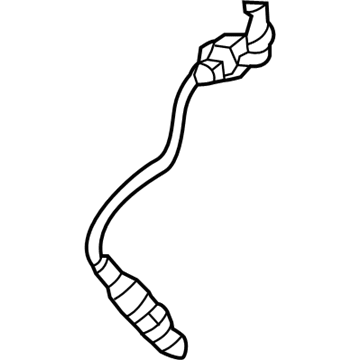
Volvo Oxygen Sensor Part Number: 32225109
$259.72 MSRP: $393.50You Save: $133.78 (34%)Ships in 1-2 Business DaysProduct Specifications- Other Name: Heated Oxygen Sensor; Rear Oxygen Sensor
- Replaces: 31422309, 31460846
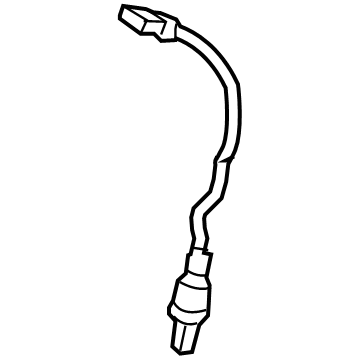
Volvo Oxygen Sensor Part Number: 31697444
$259.72 MSRP: $393.50You Save: $133.78 (34%)Ships in 1-2 Business DaysProduct Specifications- Other Name: Heated Oxygen Sensor; Rear Oxygen Sensor
Volvo Oxygen Sensor Part Number: 31492349
$259.72 MSRP: $393.50You Save: $133.78 (34%)Ships in 1-2 Business DaysProduct Specifications- Other Name: Heated Oxygen Sensor; Rear Oxygen Sensor
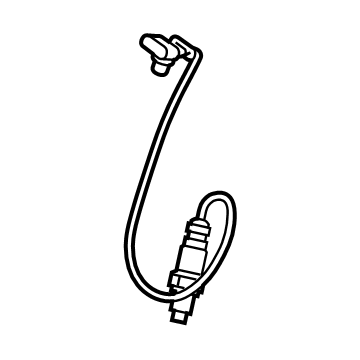
Volvo Oxygen Sensor Part Number: 31480731
$259.72 MSRP: $393.50You Save: $133.78 (34%)Ships in 1-2 Business DaysProduct Specifications- Other Name: Heated Oxygen Sensor; Rear Oxygen Sensor
| Page 1 of 5 |Next >
1-20 of 85 Results
Volvo Oxygen Sensor
Volvo Oxygen Sensor constantly measures the oxygen in the exhaust so that the engine can provide clean power and low emissions. Volvo started producing cars in 1927 in Gothenburg and has since gained a reputation for focusing on safety, comfort, and clean Scandinavian design. Robust three-point seat belts in all Volvo models, sensitive brakes, and uncluttered dashboards make daily driving simple and safe. The brand also drives ahead with electric powertrains and plug-in hybrids, proving that Volvo vehicles can remain efficient and fun. Whether they roll families around in roomy Volvo wagons or haul goods in sturdy trucks, drivers appreciate the company's focus on reliability and a calming driving experience. Just as its cars are a balance between safety and performance, the Oxygen Sensor is a balance between air and fuel throughout the entire range of vehicles. Positioned in the hot exhaust stream, the Volvo Oxygen Sensor compares residual oxygen with outside air and then sends rapid signals to the control unit, allowing it to fine-tune injector pulses in real time. A zirconia dioxide tip with platinum electrodes heats up rapidly, so proper feedback is provided even if you are doing a cold start. Wideband versions of the Oxygen Sensor measure a wider mixture range, allowing the computer even finer control to smooth acceleration, reduce fuel consumption, and extend the life of the exhaust catalysts, continuing the trend of the brand being committed to cleaner mobility.
Trust OEM Oxygen Sensor for quality that holds up. These parts use top-tier materials to keep your ride running smooth. Because they match exact Volvo specs, you get a flawless fit and a hassle-free install every single time. No more fighting with parts that just won't line up. It is easy to search our massive stock of genuine Volvo options at prices you will really like. Every part comes with a real manufacturer's warranty and a simple return policy. Plus, we ship fast to get your order to you. Shop with confidence and give your Volvo the reliability it deserves.
Volvo Oxygen Sensor Parts and Q&A
- Q:What is the function and operation of the Oxygen Sensor (02S) in vehicle exhaust systems on Volvo 940?A:The Oxygen Sensor (02S) produces an electrical voltage in response to oxygen content in exhaust gases, and is generally mounted in the exhaust manifold, and some models have internal heating for faster response. It gives a voltage between 0 and 1 volt, with lower voltages representing lean mixture and higher voltages representing rich mixture, with the ideal fuel to air ratio represented by voltages between 0.4 and 0.6 volts. Later models are equipped with two sensors for tracking the effectiveness of the catalytic converter, one tracking emissions before the converter and the other tracking emissions after the converter, giving the effectiveness of the reduction of emissions. The sensor has a specific temperature that it needs to work, and is in the OPEN LOOP mode until the engine has reached this ideal temperature, then it becomes CLOSED LOOP mode, so that the engine controller can control the air-fuel mixture depending on readings from the sensor. A Heated Oxygen Sensor (H02S) ensures optimal temperature for faster CLOSED LOOP operation where the engine controller uses information from the sensor to adjust the injector pulse width, while in OPEN LOOP the engine controller uses preprogrammed values. For testing, the H02S is disconnected and supply voltage to the heating element is checked, followed by resistance checks and continuity tests for proper function. Removing the battery by disconnecting the battery, jacking the vehicle up, carefully remove the sensor with suitable tooling, installing the sensor includes applying anti-seize compound and tightening to specified torque before reconnecting the wiring harness and lowering the vehicle.

Related Volvo Parts
 Volvo Coolant Temperature Sensor
 Volvo Engine Control Module
 Volvo Ignition Coil
 Volvo Crankshaft Position Sensor
 Volvo Fuel Level Sensor
 Volvo Transmission Control Module
 Volvo Spark Plug
 Volvo Exhaust Nut
 Volvo Ignition Control Module
 Volvo Rear Window Defroster Relay
 Volvo Temperature Sender
 Volvo Vehicle Speed Sensor
Browse by Model
240 Oxygen Sensor 244 Oxygen Sensor 245 Oxygen Sensor 850 Oxygen Sensor 940 Oxygen Sensor C30 Oxygen Sensor C70 Oxygen Sensor S40 Oxygen Sensor S60 Cross Country Oxygen Sensor S60 Oxygen Sensor S70 Oxygen Sensor S80 Oxygen Sensor S90 Oxygen Sensor V40 Oxygen Sensor V50 Oxygen Sensor V60 Cross Country Oxygen Sensor V60 Oxygen Sensor V70 Oxygen Sensor V90 Cross Country Oxygen Sensor V90 Oxygen Sensor XC40 Oxygen Sensor XC60 Oxygen Sensor XC70 Oxygen Sensor XC90 Oxygen Sensor