×
- Hello
- Login or Register
- Quick Links
- Live Chat
- Track Order
- Parts Availability
- RMA
- Help Center
- Contact Us
- Shop for
- Volvo Parts

My Garage
My Account
Cart
Genuine Volvo Spark Plug Wire
Spark Plug Ignition Wires- Select Vehicle by Model
- Select Vehicle by VIN
Select Vehicle by Model
orMake
Model
Year
Select Vehicle by VIN
For the most accurate results, select vehicle by your VIN (Vehicle Identification Number).
7 Spark Plug Wires found
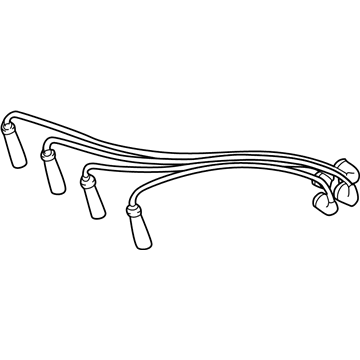
Volvo Cable Set Part Number: 1275603
$63.65 MSRP: $82.18You Save: $18.53 (23%)Ships in 1-2 Business DaysProduct Specifications- Other Name: Ignition Cable; Spark Plug Wire Set; Spark Plug Wire; Plug Wire Set
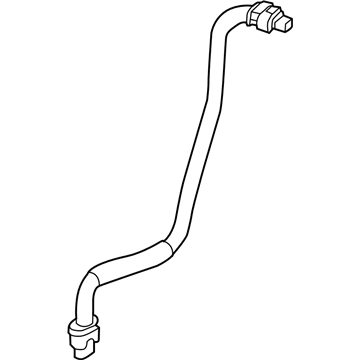
Volvo Wire Part Number: 31342677
$55.94 MSRP: $71.64You Save: $15.70 (22%)Ships in 1-2 Business DaysProduct Specifications- Other Name: Wiring Harness; Spark Plug Wire

Volvo Cable Set Part Number: 271483
$140.32 MSRP: $181.20You Save: $40.88 (23%)Ships in 1-2 Business DaysProduct Specifications- Other Name: Ignition Cable; Spark Plug Wire Set; Spark Plug Wire
Volvo IGNITION CABLE Part Number: 270525
$231.47 MSRP: $275.56You Save: $44.09 (16%)Ships in 1-2 Business DaysProduct Specifications- Other Name: Cable Set
Volvo Cable Set Part Number: 272193
$84.26 MSRP: $99.48You Save: $15.22 (16%)Ships in 1-2 Business DaysProduct Specifications- Other Name: Ignition Cable; Spark Plug Wire
Volvo Cable Set Part Number: 270880
$91.09 MSRP: $107.54You Save: $16.45 (16%)Ships in 1-2 Business DaysProduct Specifications- Other Name: Ignition Cable; Spark Plug Wire
Volvo Cable Set Part Number: 270561
$130.93 MSRP: $154.59You Save: $23.66 (16%)Ships in 1-2 Business DaysProduct Specifications- Other Name: Ignition Cable; Spark Plug Wire
Volvo Spark Plug Wire
Volvo Spark Plug Wire transmits the high voltage charge to light the fuel air mixture, providing every Volvo engine with quick starts and confident power on the road. Volvo has built its reputation on safety, clean Scandinavian design and forward thinking technology from the invention of the three point seat belt to current exploration of electric powertrains, and its cars, trucks and buses share a focus on comfortable, intuitive controls that make daily driving less stressful. Strong braking systems and clear instrumentation come standard, and each vehicle enjoys the brand's commitment to durability in harsh northern climates, a trait that brings confidence to any journey, whether it's across town or across a continent. The Spark Plug Wire complements this philosophy as a flexible and shielded conduit to conduct thousands of volts from the coil to the spark plug, without leaking energy or radiated emissions (EMI), incorporating a layered silicone jacket, fiberglass braid and EMI suppressing core that resists heat, oil and vibration common in every engine bay. When insulation remains intact, the Spark Plug Wire has crisp ignition timing, avoiding misfires and preserving fuel economy, which have been Volvo priorities of efficiency and reliability. Simple to route and safely capped with molded boots, each Spark Plug Wire serves the universal Volvo lineup, providing smooth acceleration for years.
Trust OEM Spark Plug Wire for quality that holds up. These parts use top-tier materials to keep your ride running smooth. Because they match exact Volvo specs, you get a flawless fit and a hassle-free install every single time. No more fighting with parts that just won't line up. It is easy to search our massive stock of genuine Volvo options at prices you will really like. Every part comes with a real manufacturer's warranty and a simple return policy. Plus, we ship fast to get your order to you. Shop with confidence and give your Volvo the reliability it deserves.
Volvo Spark Plug Wire Parts and Q&A
- Q:How important are spark plugs and spark plug wires for an engine's proper running and efficient operation on Volvo 244?A:The proper functioning of the spark plugs is essential to the proper running of the engine and efficient operation of the vehicle. At intervals of 6000 miles (10000 km) the plugs should be removed, examined, cleaned, and renewed if much worn, since their condition gives an indication of the general condition of the engine. A clean and white insulator nose is a sign of a weak mixture or hot plug, and hard black deposits suggest a rich mixture. When the plug is black and oily, this could be a result of engine wear with a rich mixture. Light tan to greyish brown deposits would be an indication of correct mixture and would likely be of good engine condition. Long brown tapering stains on the white portion of the plug indicate a faulty joint thus requiring renewal. Cleaning of plugs using a sand blasting machine is more effective than cleaning by hand any plug that does not spark at the recommended pressure should be replaced. The spark plug gap is very important, it is recommended to be from 0.028 - 0.032 in (0.7 - 0.8 mm). To adjust, measure with a feeler gauge and bend the outer electrode, being careful not to bend the center electrode so as to avoid cracking the insulation. When replacing plugs, use new washers and be sure to connect the leads from the distributor cap to the plugs in the correct firing order. 1, 3, 4, 2, with No. 1 cylinder closest to the fan. The plug leads do not require much maintenance, but every 6000 miles, each of the plug leads should be removed and inspected for water corrosion, which should be cleaned off, and suppressor connections should be examined for damage and renewed if necessary.
Related Volvo Parts
 Volvo Coolant Temperature Sensor
 Volvo Mass Air Flow Sensor
 Volvo Engine Control Module
 Volvo Ignition Coil
 Volvo Speed Sensor
 Volvo Camshaft Position Sensor
 Volvo Distributor
 Volvo Knock Sensor
 Volvo Transmission Control Module
 Volvo Spark Plug
 Volvo Distributor Rotor
 Volvo Ignition Control Module
Browse by Model
240 Spark Plug Wire 244 Spark Plug Wire 245 Spark Plug Wire 740 Spark Plug Wire 760 Spark Plug Wire 780 Spark Plug Wire 940 Spark Plug Wire S40 Spark Plug Wire S60 Spark Plug Wire S90 Spark Plug Wire V40 Spark Plug Wire V60 Cross Country Spark Plug Wire V60 Spark Plug Wire V90 Cross Country Spark Plug Wire V90 Spark Plug Wire XC40 Spark Plug Wire XC60 Spark Plug Wire XC90 Spark Plug Wire