×
- Hello
- Login or Register
- Quick Links
- Live Chat
- Track Order
- Parts Availability
- RMA
- Help Center
- Contact Us
- Shop for
- Volvo Parts

My Garage
My Account
Cart
Genuine Volvo Crankshaft Position Sensor
Engine Crankshaft Position Sensor- Select Vehicle by Model
- Select Vehicle by VIN
Select Vehicle by Model
orMake
Model
Year
Select Vehicle by VIN
For the most accurate results, select vehicle by your VIN (Vehicle Identification Number).
6 Crankshaft Position Sensors found
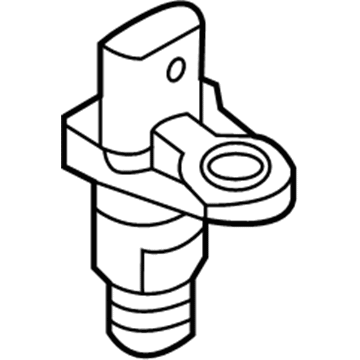
Volvo Crankshaft Position Sensor Part Number: 31342468
$83.21 MSRP: $107.46You Save: $24.25 (23%)Ships in 1-2 Business DaysProduct Specifications- Other Name: Engine Crankshaft Position Sensor; Crankshaft Sensor, ECM
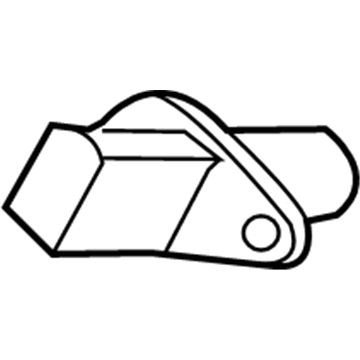
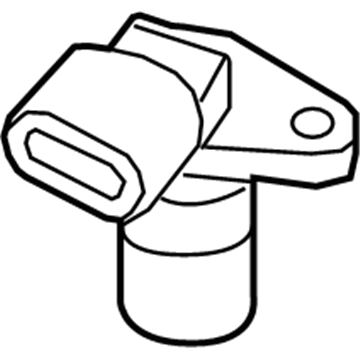
Volvo Crankshaft Position Sensor Part Number: 31331753
$83.21 MSRP: $107.46You Save: $24.25 (23%)Ships in 1-2 Business DaysProduct Specifications- Other Name: Engine Crankshaft Position Sensor; Crankshaft Sensor; Crankshaft Sensor
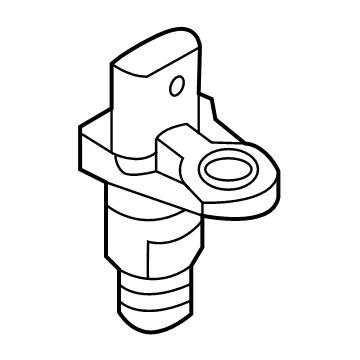
Volvo Crankshaft Position Sensor Part Number: 31303937
$83.21 MSRP: $107.46You Save: $24.25 (23%)Ships in 1-2 Business DaysProduct Specifications- Other Name: Engine Crankshaft Position Sensor; Crankshaft Sensor; Crankshaft Sensor
Volvo Crankshaft Position Sensor Part Number: 30668635
$83.21 MSRP: $107.46You Save: $24.25 (23%)Ships in 1-2 Business DaysProduct Specifications- Other Name: Crankshaft Sensor

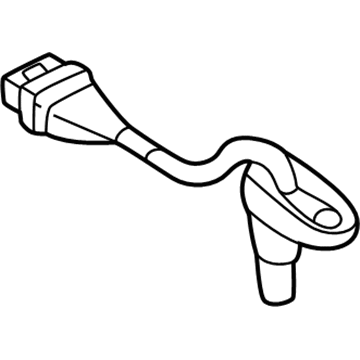
Volvo Crankshaft Position Sensor Part Number: 3547699
Product Specifications- Other Name: Engine Crankshaft Position Sensor; Hall Effect Switch, Transmitter
Volvo Crankshaft Position Sensor Part Number: 1270603
Product Specifications- Other Name: Engine Crankshaft Position Sensor; Crankshaft Sensor
Volvo Crankshaft Position Sensor
The Volvo Crankshaft Position Sensor provides the engine computer with precise data of the crank angle and speed so that spark and fuel will arrive at the right moment, providing every ride with easy starts and smooth power. Volvo's reputation is built on safety and pure Scandinavian design, combining sturdy steel bodies with features such as the three-point seat belt and sensitive braking systems that give confidence to drivers of all ages. Every Volvo is also a fan of intuitive dashboards and friendly seats, which have shown that comfort can coexist with cutting-edge protection. Forward-looking ideas such as plug-in hybrids and fully electric powertrains demonstrate how Volvo values both performance and environmental responsibility, while attention to detail in terms of fit and finish adds that little bit of day-to-day luxury. Just as the brand strives for a balance in engineering, the Crankshaft Position Sensor is committed to the harmony within the engine to read a toothed wheel and convert motion into fast electrical pulses that can be understood by the control module. These pulses allow the computer to fine-tune ignition timing, control the fuel spray, and even affect variable valve timing, which wipes away the need for old-fashioned manual tweaking. A healthy Crankshaft Position Sensor ensures quick starts, smooth idling, and crisp acceleration across the entire lineup, which is a promise of the same reliability that Volvo drivers expect. If heat or vibration shakes its signal, hesitation or misfires are quick to signal the need for attention to this little but important component before those legendary Volvo road manners are a thing of the past.
Trust OEM Crankshaft Position Sensor for quality that holds up. These parts use top-tier materials to keep your ride running smooth. Because they match exact Volvo specs, you get a flawless fit and a hassle-free install every single time. No more fighting with parts that just won't line up. It is easy to search our massive stock of genuine Volvo options at prices you will really like. Every part comes with a real manufacturer's warranty and a simple return policy. Plus, we ship fast to get your order to you. Shop with confidence and give your Volvo the reliability it deserves.
Volvo Crankshaft Position Sensor Parts and Q&A
- Q:What is the significance of the Crankshaft Position Sensor in engine operation on Volvo 960?A:The Crankshaft Position (CKP) Sensor. Aka, RPM or Impulse Sensor, the Crankshaft position sensor is necessary to determine the engine's speed and Top Dead Center (TDC) to ensure the precise timing of the ignition system. Positioned at the back of the engine block above the flywheel, this transmits the engine speed to the fuel control unit, which is very important for engine start-up. In case of vehicles with LH Jetronic and EZK Ignition Systems, the pulsewheel displays 60 markings for CKP sensor and 58 drilled holes provide information to the ignition control unit and 2 markings at 90 degrees Before Top Dead Center (BTDC) for cylinders No. 1 and 4 for control ignition timing without changing their timing. Similarly, Regina Engine Control and REX-1 Ignition Systems have 44 markings, the same thing for the ignition timing configuration. In Motronic Engine Control Systems the flywheel has holes on the top surface that induce voltage in the CKP sensor which generates an A/C signal with a frequency depending upon the number of holes passing per second; the voltage varies from 0.1 to 55 volt DC depending upon engine speed and temperature; a longer hole is provided at 90 TDC for cylinder 1 to allow the ECM to calculate camshaft position. For testing, unhook the negative battery cable, unhook the sensor connector and test the resistance across the two sensor terminals, it should be between 200-500 ohms, if not it is out of range, the sensor needs replacement. For removal and installation, remove the negative battery cable, access the sensor by removing the required components, unplug the connector and remove the retaining screws to remove the sensor. To install, install the sensor, tighten the bolts, reconnect the connector, reinsert any parts removed, and reconnect the negative battery cable.
Related Volvo Parts
 Volvo Coolant Temperature Sensor
 Volvo Oxygen Sensor
 Volvo Mass Air Flow Sensor
 Volvo Speed Sensor
 Volvo Camshaft Position Sensor
 Volvo Knock Sensor
 Volvo Relay
 Volvo Transmission Control Module
 Volvo Spark Plug
 Volvo Rear Window Defroster Relay
 Volvo Temperature Sender
 Volvo Vehicle Speed Sensor
Browse by Model
850 Crankshaft Position Sensor 960 Crankshaft Position Sensor C70 Crankshaft Position Sensor S40 Crankshaft Position Sensor S60 Crankshaft Position Sensor S60 Cross Country Crankshaft Position Sensor S70 Crankshaft Position Sensor S80 Crankshaft Position Sensor S90 Crankshaft Position Sensor V40 Crankshaft Position Sensor V60 Crankshaft Position Sensor V60 Cross Country Crankshaft Position Sensor V70 Crankshaft Position Sensor V90 Crankshaft Position Sensor V90 Cross Country Crankshaft Position Sensor XC40 Crankshaft Position Sensor XC60 Crankshaft Position Sensor XC70 Crankshaft Position Sensor XC90 Crankshaft Position Sensor