×
- Hello
- Login or Register
- Quick Links
- Live Chat
- Track Order
- Parts Availability
- RMA
- Help Center
- Contact Us
- Shop for
- Volvo Parts

My Garage
My Account
Cart
Genuine Volvo Camshaft Position Sensor
Cam Position Sensor- Select Vehicle by Model
- Select Vehicle by VIN
Select Vehicle by Model
orMake
Model
Year
Select Vehicle by VIN
For the most accurate results, select vehicle by your VIN (Vehicle Identification Number).
8 Camshaft Position Sensors found

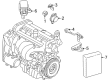
Volvo Camshaft Position Sensor Part Number: 9202134
$63.65 MSRP: $82.18You Save: $18.53 (23%)Ships in 1-2 Business DaysProduct Specifications- Other Name: Cmp Sensor; Engine Camshaft Position Sensor; Camshaft Sensor; Camshaft Sensor, Position Sensor, Sensor
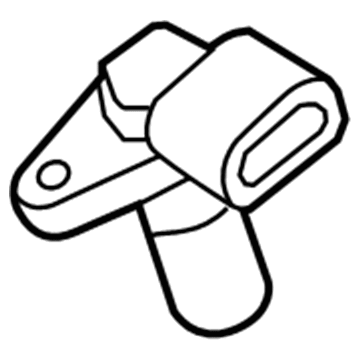
Volvo Camshaft Position Sensor Part Number: 8658495
$83.21 MSRP: $107.46You Save: $24.25 (23%)Ships in 1-2 Business DaysProduct Specifications- Other Name: Camshaft Position Sensor; Camshaft Sensor; Camshaft Sensor, Speed Sensor
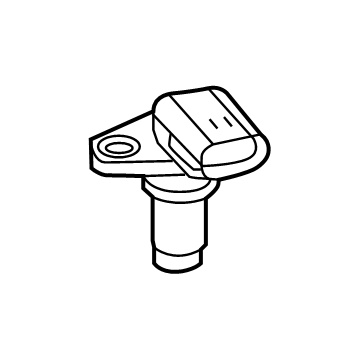
Volvo Camshaft Position Sensor Part Number: 31491073
$83.21 MSRP: $107.46You Save: $24.25 (23%)Ships in 1-2 Business DaysProduct Specifications- Other Name: Impulse Sensor; Engine Camshaft Position Sensor; Camshaft Sensor
- Replaces: 31272689

Volvo Camshaft Position Sensor Part Number: 30713370
$83.21 MSRP: $107.46You Save: $24.25 (23%)Ships in 1-2 Business DaysProduct Specifications- Other Name: Camshaft Sensor, Position Sensor, Sensor
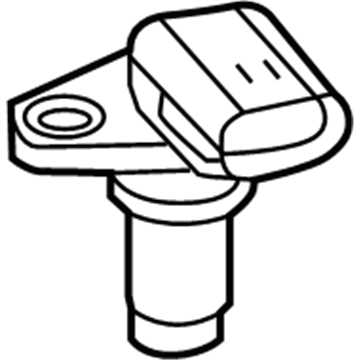
Volvo Camshaft Position Sensor Part Number: 30668636
$83.21 MSRP: $107.46You Save: $24.25 (23%)Ships in 1-2 Business DaysProduct Specifications- Other Name: Impulse Sensor; Camshaft Sensor

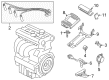
Volvo Camshaft Position Sensor Part Number: 9202117
$128.10 MSRP: $162.88You Save: $34.78 (22%)Ships in 1-2 Business DaysProduct Specifications- Other Name: Cmp Sensor; Engine Camshaft Position Sensor; Camshaft Sensor

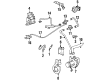
Volvo Camshaft Position Sensor Part Number: 9146108
$283.18 MSRP: $368.72You Save: $85.54 (24%)Ships in 1-2 Business DaysProduct Specifications- Other Name: Cmp Sensor; Engine Camshaft Position Sensor; Camshaft Sensor
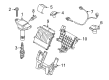
Volvo Camshaft Position Sensor Part Number: 30711293
$83.21 MSRP: $107.46You Save: $24.25 (23%)Product Specifications- Other Name: Engine Camshaft Position Sensor; Camshaft Sensor, Position Sensor
Volvo Camshaft Position Sensor
The Volvo Camshaft Position Sensor delivers millisecond precise readings of cam position and speed to allow the engine computer to synchronize fuel injection and spark for fast starts, nice idling, and stout acceleration. The strong magnetic pickup is resistant to heat and vibration, so reliability remains high over days of hard driving. For the entire Volvo range, this small Camshaft Position Sensor is mounted close to the cam gear and, through its continuous feed of the precise RPM, will help ensure that your car performs at its optimal and that your mileage is as economical as possible, as well as helping to prevent any misfires from occurring that could lead to stalling. In the event that the unit is aged, the replacement of the Camshaft Position Sensor immediately helps to restore the correct timing, which in turn preserves pistons and valves from detrimental collisions. Data initially collected by the Camshaft Position Sensor also helps the tachometer to remain accurate, an example of how electronic precision contributes to Volvo attention to detail. Beyond this vital element, Volvo has developed a reputation for intelligent safety worldwide, from introducing the three-point seat belt to its use of advanced braking and clear instrumentation to ensure drivers are informed and safe. Every Volvo model combines clean Scandinavian design with simple controls that minimize distraction, and the brand now presses ahead to an electric future by investing in large numbers of plug-in hybrids and full battery vehicles. Strong chassis construction, responsive steering, and careful ergonomic seats make a long way on the highway less exhausting, while stringent crash testing makes Volvo a standard in relation to occupant protection.
Trust OEM Camshaft Position Sensor for quality that holds up. These parts use top-tier materials to keep your ride running smooth. Because they match exact Volvo specs, you get a flawless fit and a hassle-free install every single time. No more fighting with parts that just won't line up. It is easy to search our massive stock of genuine Volvo options at prices you will really like. Every part comes with a real manufacturer's warranty and a simple return policy. Plus, we ship fast to get your order to you. Shop with confidence and give your Volvo the reliability it deserves.
Volvo Camshaft Position Sensor Parts and Q&A
- Q:What is the role of the Camshaft Position Sensor and How tot be tested and replaced on Volvo 960?A:The function of the Camshaft Position (CMP) sensor is to let the ECM know whether the camshaft is on the first or second revolution of an engine cycle, allowing the engine to know which of the pistons are approaching TDC and, in combination with the crankshaft position sensor, to know which cylinder needs to be ignited. The CMP sensor consists of a trigger rotor which rotates at the same speed as the camshaft and a Hall effect switch, the ECM supplies 5 volts to the Hall effect sensor which grounds when the rotor passes the switch, this will send out a zero voltage signal and the sensor is shielded and will send the 5 volt signal to the ECM. To test the CMP sensor, first unplug the sensor and remove the negative battery cable. Measure the voltage at terminal 3 with a voltmeter when the ignition is ON, it should be the same as the battery voltage. Next, check on the signal return at terminal 2, which should be around 5 volts. For the ground circuit, measure the resistance from terminal 1, which should be 0 ohms. If continuity is out or not there, repair the circuit and if continuity is fine, replace the CMP sensor. For removal, detach the negative battery cable, remove the air inlet hose, unplug the sensor connector and remove the retaining screws to remove the sensor. To install, place back the sensor, tighten the bolts, reconnect the sensor, reinstall the air inlet hose and reconnect the negative battery cable.
Related Volvo Parts
 Volvo Coolant Temperature Sensor
 Volvo Mass Air Flow Sensor
 Volvo Engine Control Module
 Volvo Battery Fuse
 Volvo Relay
 Volvo Starter Relay
 Volvo Throttle Position Sensor
 Volvo Transmission Control Module
 Volvo Fuse
 Volvo Daytime Running Light Relay
 Volvo Distributor Rotor
 Volvo Temperature Sender
Browse by Model
850 Camshaft Position Sensor 960 Camshaft Position Sensor C30 Camshaft Position Sensor C70 Camshaft Position Sensor S40 Camshaft Position Sensor S60 Camshaft Position Sensor S60 Cross Country Camshaft Position Sensor S70 Camshaft Position Sensor S80 Camshaft Position Sensor S90 Camshaft Position Sensor V40 Camshaft Position Sensor V50 Camshaft Position Sensor V60 Camshaft Position Sensor V60 Cross Country Camshaft Position Sensor V70 Camshaft Position Sensor V90 Camshaft Position Sensor V90 Cross Country Camshaft Position Sensor XC40 Camshaft Position Sensor XC60 Camshaft Position Sensor XC70 Camshaft Position Sensor XC90 Camshaft Position Sensor