×
- Hello
- Login or Register
- Quick Links
- Live Chat
- Track Order
- Parts Availability
- RMA
- Help Center
- Contact Us
- Shop for
- Volvo Parts

My Garage
My Account
Cart
Genuine Volvo Camber and Alignment Kit
- Select Vehicle by Model
- Select Vehicle by VIN
Select Vehicle by Model
orMake
Model
Year
Select Vehicle by VIN
For the most accurate results, select vehicle by your VIN (Vehicle Identification Number).
112 Camber and Alignment Kits found
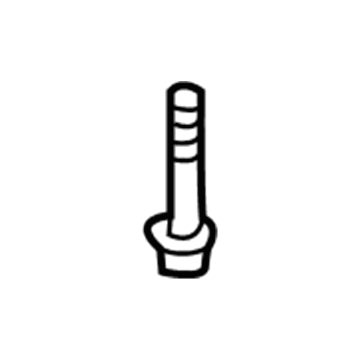
Volvo Engine Cradle Bolt Part Number: 981534
$11.09 MSRP: $16.24You Save: $5.15 (32%)Ships in 1-2 Business DaysProduct Specifications- Other Name: Sems Screw; Camber And Alignment Kit
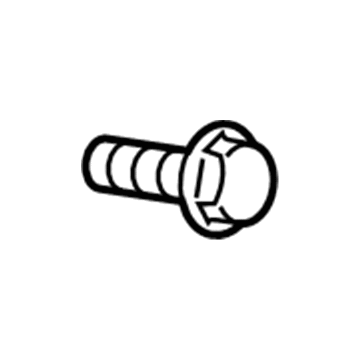
Volvo Battery Cable Bolt Part Number: 999231
$2.96 MSRP: $3.80You Save: $0.84 (23%)Ships in 1-2 Business DaysProduct Specifications- Other Name: Flange Screw; Camber And Alignment Kit
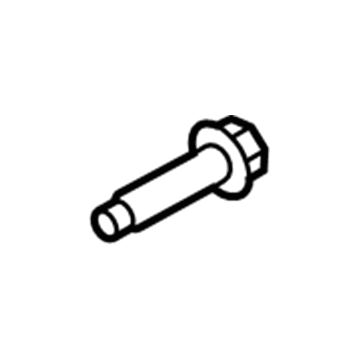
Volvo Drive Shaft Bolt Part Number: 988143
$2.96 MSRP: $3.80You Save: $0.84 (23%)Ships in 1-2 Business DaysProduct Specifications- Other Name: Hex. Socket Screw; Camber And Alignment Kit; Drive Shaft Front Bolt, Drive Shaft Rear Bolt
- Replaced by: 32137567
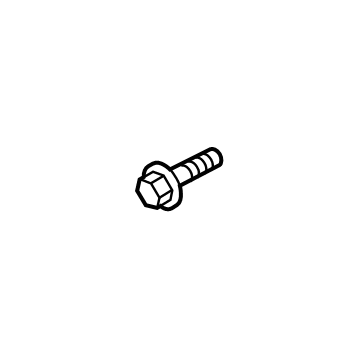
Volvo Stabilizer Bar Bolt Part Number: 987515
$2.96 MSRP: $3.80You Save: $0.84 (23%)Ships in 1-2 Business DaysProduct Specifications- Other Name: Flange Screw; Camber And Alignment Kit
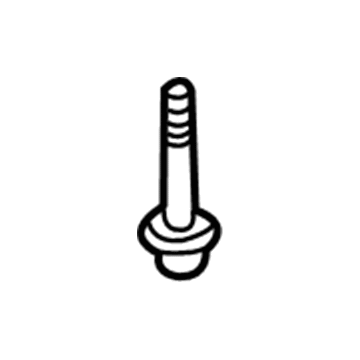
Volvo Mount Bolt Part Number: 987430
$2.96 MSRP: $3.80You Save: $0.84 (23%)Ships in 1-2 Business DaysProduct Specifications- Other Name: Flange Screw; Camber And Alignment Kit
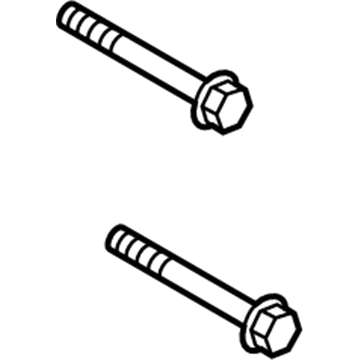
Volvo Front Bracket Bolt Part Number: 985658
$2.96 MSRP: $3.80You Save: $0.84 (23%)Ships in 1-2 Business DaysProduct Specifications- Other Name: Flange Screw; Camber And Alignment Kit; Lower Bracket Bolt, Mount Bracket Bolt
- Position: Front
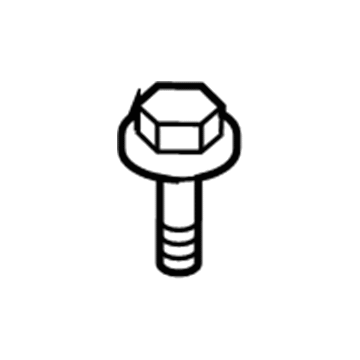
Volvo Bracket Screw Part Number: 985188
$2.96 MSRP: $3.80You Save: $0.84 (23%)Ships in 1-2 Business DaysProduct Specifications- Other Name: Flange Screw; Camber And Alignment Kit
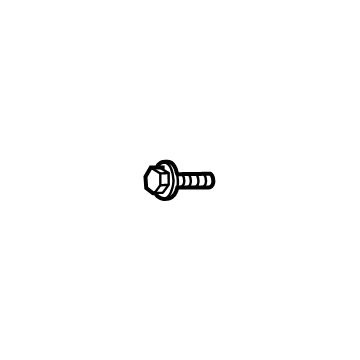
Volvo Steering Column Lower Bolt Part Number: 985039
$2.96 MSRP: $3.80You Save: $0.84 (23%)Ships in 1-2 Business DaysProduct Specifications- Other Name: Flange Screw; Camber And Alignment Kit
- Position: Lower
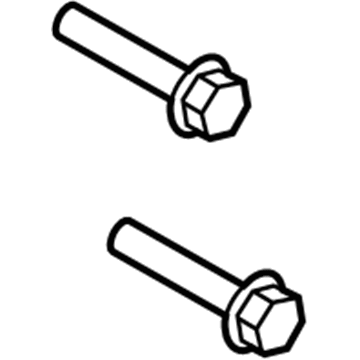
Volvo Starter Mount Bolt Part Number: 982820
$2.96 MSRP: $3.80You Save: $0.84 (23%)Ships in 1-2 Business DaysProduct Specifications- Other Name: Flange Screw; Camber And Alignment Kit; Mount Bracket Bolt
Volvo Alternator Mount Bolt Part Number: 982804
$2.96 MSRP: $3.80You Save: $0.84 (23%)Ships in 1-2 Business DaysProduct Specifications- Other Name: Flange Screw; Camber And Alignment Kit; Mount Bracket Bolt

Volvo Track Bar Adjust Cam Part Number: 31201493
$2.96 MSRP: $3.80You Save: $0.84 (23%)Ships in 1-2 Business DaysProduct Specifications- Other Name: Eccentric Washer; Camber And Alignment Kit; Track Bar Washer
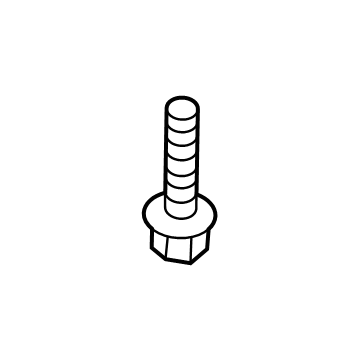
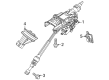
Volvo Sems Screw Part Number: 30769352
$2.96 MSRP: $3.80You Save: $0.84 (23%)Ships in 1-2 Business DaysProduct Specifications- Other Name: Steering Column Upper Bolt
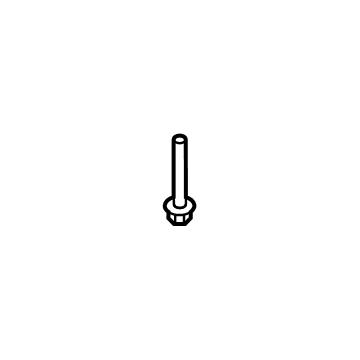
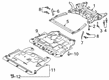
Volvo Suspension Crossmember Bolt Part Number: 30746647
$2.96 MSRP: $3.80You Save: $0.84 (23%)Ships in 1-2 Business DaysProduct Specifications- Other Name: Flange Screw; Camber And Alignment Kit
- Replaces: 988987
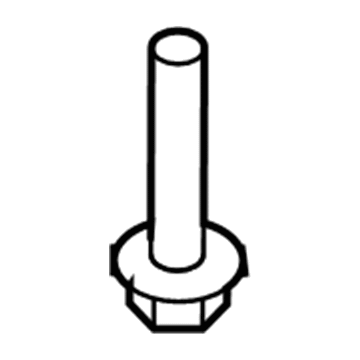
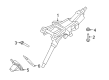
Volvo Steering Column Upper Bolt Part Number: 30741295
$2.96 MSRP: $3.80You Save: $0.84 (23%)Ships in 1-2 Business DaysProduct Specifications- Other Name: Flange Screw; Camber And Alignment Kit
- Position: Upper
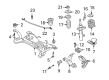
Volvo Support Brace Bolt Part Number: 30741286
$2.96 MSRP: $3.80You Save: $0.84 (23%)Ships in 1-2 Business DaysProduct Specifications- Other Name: Sems Screw; Camber And Alignment Kit; Strut Mount Screw
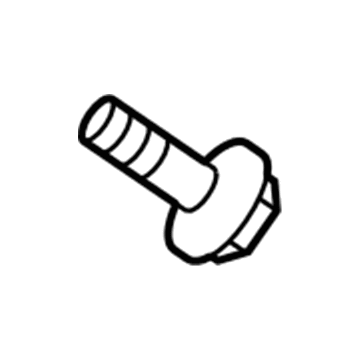
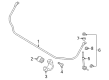
Volvo Stabilizer Bar Bolt Part Number: 30741285
$2.96 MSRP: $3.80You Save: $0.84 (23%)Ships in 1-2 Business DaysProduct Specifications- Other Name: Flange Screw; Camber And Alignment Kit; Stabilizer Bar Screw

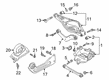
Volvo Lower Control Arm Adjust Cam Part Number: 30741283
$2.96 MSRP: $3.80You Save: $0.84 (23%)Ships in 1-2 Business DaysProduct Specifications- Other Name: Eccentric Washer; Camber And Alignment Kit
- Position: Lower
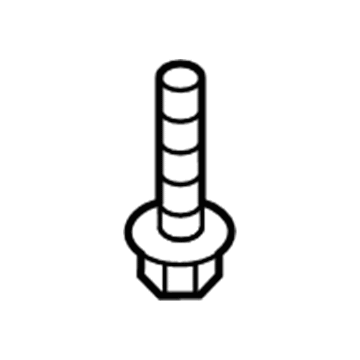
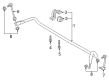
Volvo Stabilizer Bar Bolt Part Number: 30670581
$2.96 MSRP: $3.80You Save: $0.84 (23%)Ships in 1-2 Business DaysProduct Specifications- Other Name: Flange Screw; Camber And Alignment Kit
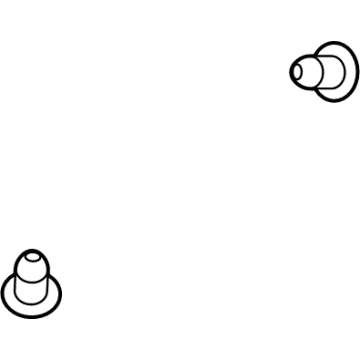
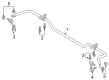
Volvo Stabilizer Bar Bolt Part Number: 30670536
$2.96 MSRP: $3.80You Save: $0.84 (23%)Ships in 1-2 Business DaysProduct Specifications- Other Name: Flange Screw; Camber And Alignment Kit
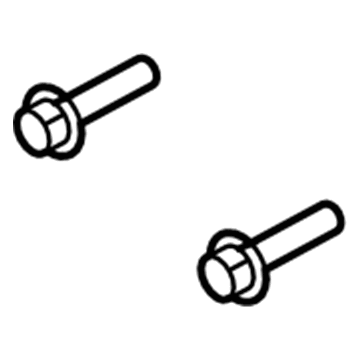
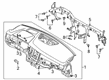
Volvo Steering Column Mount Bolt Part Number: 30624313
$2.96 MSRP: $3.80You Save: $0.84 (23%)Ships in 1-2 Business DaysProduct Specifications- Other Name: Sems Screw; Camber And Alignment Kit; Reinforcement Beam Screw
| Page 1 of 6 |Next >
1-20 of 112 Results
Volvo Camber and Alignment Kit
Volvo Camber and Alignment Kit keeps wheel angles in check to keep tires flat on the road and steering centered even after bumps or changes in height. Volvo has built a name for itself combining Swedish durability with forward-thinking safety, from leading the way in the invention of the three-point seat belt to installing reliable brakes and straightforward instrumentation throughout its range. The brand is all about clean design, intuitive controls, and an expanding variety of electric and hybrid powertrains that provide drivers with comfort, reduced emissions, and confidence in any condition. Every vehicle also enjoys robust chassis engineering that balances ride quality with solid handling, giving even more strength to the Volvo commitment to family safety and daily practicality. The Camber and Alignment Kit builds on that foundation and adds adjustable bolts, shims, and bushings that can be applied to quickly fine-tune camber, caster, and toe, restoring factory geometry after pothole strikes or suspension upgrades. With the Camber and Alignment Kit installed, the tires wear evenly, the grip of the road improves whether it is raining or dry, the steering wheel tracks straight on the highway or bumpy road, tire life is extended, and the driver will feel more assured. Because it is fit for the entirety of the Volvo range, the kit produces a universal solution that enhances the brand's trademark stability and ride comfort. Simple adjustments using the Camber and Alignment Kit help every Volvo to retain the crisp, composed character owners expect.
Trust OEM Camber and Alignment Kit for quality that holds up. These parts use top-tier materials to keep your ride running smooth. Because they match exact Volvo specs, you get a flawless fit and a hassle-free install every single time. No more fighting with parts that just won't line up. It is easy to search our massive stock of genuine Volvo options at prices you will really like. Every part comes with a real manufacturer's warranty and a simple return policy. Plus, we ship fast to get your order to you. Shop with confidence and give your Volvo the reliability it deserves.
Volvo Camber and Alignment Kit Parts and Q&A
- Q:What is the role of a Camber and Alignment Kit in defining a steering and suspension geometry on Volvo V40?A:A car's steering and suspension geometry is characterized by 4 fundamental settings, with all the angles measured in degrees. The steering axis is an imaginary line through the axis of the suspension strut going to the ground. Camber is the angle between each roadwheel and a vertical line through the centre of the roadwheel where a positive camber angle will tilt the wheels outwards and a negative camber angle will tilt the wheels inwards. The front wheel camber angle can be adjusted by repositioning the swivel hub and the rear wheel camber angle is adjusted by rotating the suspension lower arm inner pivot bolt. Castor is the angle between the steering axis and a vertical line through the centre of each roadwheel, with positive castor providing a forward tilt of the steering axis and negative castor providing a backwards tilt, this is not adjustable. Toe is the difference between lines drawn through the centres of the roadwheels and the centre line of the car, toe-in is inward pointing and toe-out is outward pointing. Adjustments for toe settings include screwing in and out the track rod for the front wheels and rotating the control link pivot bolt for the rear wheels. Kingpin inclination or steering axis inclination is the angle between the steering axis and a vertical line through the centre of each roadwheel, which is also not adjustable. For accurate measurements, the car should be unloaded, the tires should be properly inflated, and the front wheels should be aligned straight ahead. To check the toe setting there is a need for a tracking gage, but there are two types of such gage, one is to check the distance between the roadwheels when the car is stopped, and the other is to check the contact surface of the tire when in motion. If adjustments are required, the car should be properly jacked up, and the amount of exposed thread on the track rod ends should be measured to insure equal adjustment. After cleaning the track rod threads and applying grease to the gaiters the track rods can be adjusted by unscrewing the locknut and changing the length of the rods. Once the correct setting is achieved the locknuts should be tightened, and the lengths of both track rods should be checked for equality. If the steering wheel spokes are not horizontal after adjustment the steering wheel may need to be repositioned. For camber adjustments, measuring equipment access is required and the camber angle can be changed by adjusting the swivel hub assembly in relation to the strut for the front wheels, and the rear wheels need to change the suspension lower arm inner pivot bolt. After adjustments, the camber angle should be rechecked to make sure it's within specified limits.
- Q:What is the role of a Camber and Alignment Kit in defining a car's steering and suspension geometry on Volvo V70?A:A car's steering and suspension geometry is defined by four basic settings, expressed in degrees, camber, castor, steering axis inclination, and toe setting, with only the front camber and front and rear wheel toe settings being adjustable on the models discussed. Camber refers to the angle of the front wheels from the vertical when viewed from the front or rear, with negative camber indicating inward tilt at the top. The front camber angle is adjusted by loosening the steering knuckle-to-suspension strut mounting bolts and repositioning the hub carrier assemblies. Castor is the angle between the steering axis and a vertical line when viewed from the side, with positive castor indicating a rearward inclination at the top. Steering axis inclination is the angle between the vertical and an imaginary line drawn through the front suspension strut upper mounting and the control arm balljoint when viewed from the front. Toe setting measures the difference in distance between the front inside edges of the roadwheels and the diametrically opposite distance between the rear inside edges, with toe-in indicating inward pointing wheels and toe-out indicating outward splaying. The front wheel toe setting is adjusted by changing the length of the steering track rods, while the rear wheel toe setting is adjusted by altering the position of the rear suspension transverse arm-to-trailing arm mountings. Except for the front and rear toe settings and front camber angles, all other suspension and steering angles are set during manufacture, assuming they remain correct unless the vehicle has sustained accident damage. Special optical measuring equipment is required to accurately check and adjust the front and rear toe settings and front camber angles, and this work should be performed by a qualified dealer or expert, although many tyre-fitting centres can conduct at least a front wheel toe setting check for a nominal fee.


Related Volvo Parts
 Volvo Ball Joint
 Volvo Coil Springs
 Volvo Control Arm
 Volvo Strut Bearing
 Volvo Air Suspension Compressor
 Volvo Air Suspension Solenoid
 Volvo Axle Beam Mount
 Volvo Control Arm Bolt
 Volvo Control Arm Nut
 Volvo Shock Absorber
 Volvo Sway Bars
 Volvo Wheel Bearing Dust Cap
Browse by Model
850 Camber and Alignment Kit 940 Camber and Alignment Kit 960 Camber and Alignment Kit C30 Camber and Alignment Kit C40 Recharge Camber and Alignment Kit C70 Camber and Alignment Kit EC40 Camber and Alignment Kit EX30 Camber and Alignment Kit EX90 Camber and Alignment Kit S40 Camber and Alignment Kit S60 Camber and Alignment Kit S60 Cross Country Camber and Alignment Kit S70 Camber and Alignment Kit S80 Camber and Alignment Kit S90 Camber and Alignment Kit V40 Camber and Alignment Kit V50 Camber and Alignment Kit V60 Camber and Alignment Kit V60 Cross Country Camber and Alignment Kit V70 Camber and Alignment Kit V90 Camber and Alignment Kit V90 Cross Country Camber and Alignment Kit XC40 Camber and Alignment Kit XC40 Recharge Camber and Alignment Kit XC60 Camber and Alignment Kit XC70 Camber and Alignment Kit XC90 Camber and Alignment Kit