×
- Hello
- Login or Register
- Quick Links
- Live Chat
- Track Order
- Parts Availability
- RMA
- Help Center
- Contact Us
- Shop for
- Volvo Parts

My Garage
My Account
Cart
Genuine Volvo S40 Timing Belt
Engine Timing Belt- Select Vehicle by Model
- Select Vehicle by VIN
Select Vehicle by Model
orMake
Model
Year
Select Vehicle by VIN
For the most accurate results, select vehicle by your VIN (Vehicle Identification Number).
2 Timing Belts found
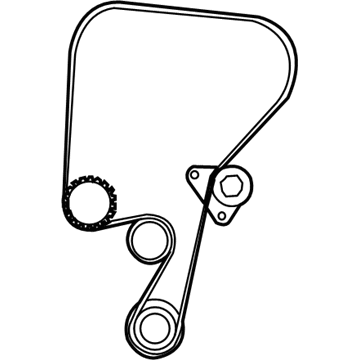
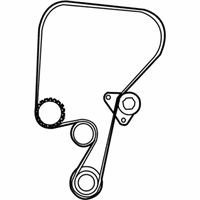
Volvo S40 Timing Belt Part Number: 30731727
$248.15 MSRP: $375.99You Save: $127.84 (34%)Ships in 1-2 Business Days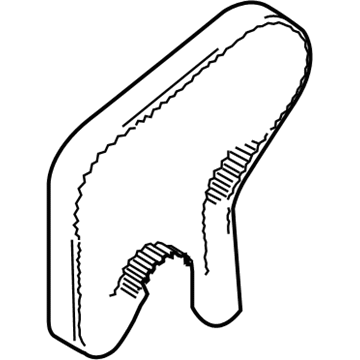
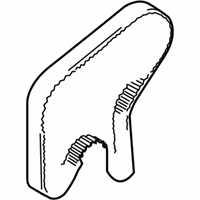
Volvo S40 Timing Belt Part Number: 8627484
$60.91 MSRP: $90.79You Save: $29.88 (33%)Ships in 1-2 Business Days
Volvo S40 Timing Belt
The Volvo S40 Timing Belt plays a key role in helping the engine to keep time, bonding the crankshaft with one or two camshafts so that the valves open and close in ideal time with the movement of the piston. It is easily wrapped around pulleys by the use of a toothed rubber belt that is reinforced by fibers and is silent as well as requiring no lubrication; it is also less expensive than metal chains or gears. The belt is tightened with a spring-loaded tensioner and idler pulleys that ensure that the belt does not slip or jump over teeth, which would cause performance to be thrown off and, in the case of interference engines, ensure that the piston will hit a valve and destroy the motor. When the Timing Belt is likely to break unexpectedly, it is important to check whether it is cracked, has missing teeth, is frayed, or is oily; any of these situations requires an immediate replacement. New automatic tensioners and idler pulleys are prudent additions whenever a new belt is installed, and the water pump should be added to the list of parts since the belt in most cases spins the pump and labor overlap is usually high. In the case of Volvo drivers, it is also inexpensive to adhere to the mileage recommendations of the manual. The standard fiber-reinforced rubber layout has been the only standard layout across the various years of production, with more recent models having curved teeth to provide improved, quiet, long life, which was a slight advantage to the later Volvo models, but the basic operation remained the same in all S40 models. The Timing Belt is also tiny but essential in delivering dependable Volvo power.
OEM parts are the only choice for top quality and real functionality. They pass strict checks, and they match Volvo's factory specs, so installation is easy. If you need new Timing Belt and you want quality and fit. You will find both here. Our site has a wide range of OEM Volvo S40 parts. The prices are unbeatable, allowing you to get value for money. Each genuine S40 Timing Belt comes with the manufacturer's warranty. That gives you peace of mind. We ship fast to your door. Order today, and enjoy a smooth, no-hassle upgrade with parts that fit right.
Volvo S40 Timing Belt Parts and Q&A
- Q:What are the steps involved in replacing a timing belt and ensuring proper installation on Volvo S40?A:The timing belt turns the Camshaft, high pressure fuel pump and coolant pump from a toothed sprocket on the crankshaft; if the belt breaks or slips, pistons can impinge on valve heads, causing considerable damage. This should be renewed at specified intervals or sooner if contaminated with oil or noisy. When removing the timing belt, it's a good idea to examine the coolant pump for leaks to prevent future timing belt removal. Begin by applying the handbrake, jacking and supporting the front of the vehicle on axle stands. Remove the front right-hand roadwheel, wheel arch liner and engine undershield which is held in place by screws. Next, remove the upper and lower timing belt covers, then use a jack to support the engine and check the coolant expansion tank. Remove the mounting on the right-hand engine, crankshaft position sensor and plate underneath camshaft sprocket. Take off the timing belt protection bracket and lock the crankshaft and the camshaft in position. Slacken the belt tensioner pulley bolt to relieve tension and then remove the timing belt while observing its route. Renew the belt regardless of the condition as the cost of a new belt is minimal compared to possible repairs. If oil contamination is present, trace and fix the leak, clean the area, and make sure that the tensioner and idler pulleys can rotate freely. For refitting, make sure timing pins are in position, locate the timing belt in the crankshaft sprocket and keep it tight as you run it around the other sprockets. Refit the timing belt protection bracket and tighten the bolt. Adjust the tensioner and rotate the crankshaft clockwise ten times and check the tensioner index arm alignment. If off, remove the belt and start the refitting process again. The remainder of the steps is simply to reverse the removal process and tighten all of the fasteners to the specified torque.
- Q:How to remove and refit the Belt Tensioner and Timing Belt on engine components for 2.0 litre 4-cylinder diesel engine on Volvo S40?A:To remove the engine parts, first disconnect the battery negative lead and remove the plastic cover on top of the engine. Lift the coolant expansion tank without disconnecting the hoses and move it aside. Loosen the front right hand roadwheel bolts, raise the car on axle stands, and place the car on axle stands securely before removing the roadwheel. Remove the engine undershield by releasing the 7 Torx screws and take the auxiliary drivebelt off. Support the engine before removing right hand mounting, by engine support bar or crane and attach lifting gear to engine lifting eye. With the engine supported, remove the right hand engine mounting, remove cable clip on timing belt cover, remove bolts to remove top timing belt cover. Loosen the crankshaft pulley bolt without losing the old bolt for reassembling. Use special tools to set the engine at TDC for No 1 cylinder or you can use an 8mm drill bit and rod. Remove the bolts from the starter motor and set it to one side to reveal the crankshaft setting tool hole. Rotate the engine clockwise until the camshaft sprocket hole and the Cylinder Head hole are aligned, insert the crankshaft setting tool and have an assistant rotate the crankshaft to align the holes. Insert the camshaft locking tool through the camshaft sprocket into the cylinder head, adjusting the camshaft sprocket a bit if necessary. Disconnect the wiring plug from the crankshaft position sensor, undo the bolt and remove the sensor. Remove the crankshaft pulley and sensor ring/spacer and undo the bolts to remove the lower timing belt cover. Raise the engine a bit and release the timing belt tension by loosening the bolt of the timing belt tensioning pulley, and remove the timing belt, which is not allowed to be used again. Loosen the bolts and remove the engine mounting bracket and idler pulley, and remove the tensioner bolt, the tensioner, and idler pulleys. If it is not immediately to be provided with a new timing belt, then temporarily refit the right-hand engine mounting and tighten the bolts. To refit, make sure that the crankshaft and camshaft are still at TDC on No 1 cylinder, fit the new idler pulley, and insert the retaining bolt. Refit the engine mounting bracket and tighten the bolts to the recommended torque. Fit the new timing belt tensioner and tighten it finger tight. Fit the new timing belt over the sprockets properly (the arrows on the timing belt should point to the direction of rotation). Turn the tensioner arm anti-clockwise until the pointer is in the correct position and then tighten the tensioner retaining bolt firmly. Refit timing belt lower cover and tighten bolts and then sensor ring/spacer and crankshaft pulley, tighten old pulley bolt to specified torque. Remove the setting/locking tools, then rotate the crankshaft two complete revolutions clockwise and check to see if the camshaft locking tool can be reinserted. Adjust the tensioner pointer, if required, and tighten the retaining bolt tightly. Replace the old crankshaft pulley bolt with a new one, tightening the new bolt to the specified torque, and not rotating the crankshaft. Finally, remove the locking tools and complete the refitting process, making sure to tighten all fasteners to their specified torque.
Related Volvo S40 Parts
 Volvo S40 Dipstick
 Volvo S40 Oil Drain Plug
 Volvo S40 Camshaft
 Volvo S40 Crankshaft
 Volvo S40 Crankshaft Seal
 Volvo S40 Crankshaft Timing Gear
 Volvo S40 Intake Valve
 Volvo S40 Timing Cover
 Volvo S40 Valve Lifter
 Volvo S40 Valve Spring Retainer
 Volvo S40 Valve Spring Retainer Keeper
 Volvo S40 Valve Stem Seal