×
- Hello
- Login or Register
- Quick Links
- Live Chat
- Track Order
- Parts Availability
- RMA
- Help Center
- Contact Us
- Shop for
- Volvo Parts

My Garage
My Account
Cart
Genuine Volvo V70 Coolant Temperature Sensors
Coolant Temperature Sensor- Select Vehicle by Model
- Select Vehicle by VIN
Select Vehicle by Model
orMake
Model
Year
Select Vehicle by VIN
For the most accurate results, select vehicle by your VIN (Vehicle Identification Number).
3 Coolant Temperature Sensors found
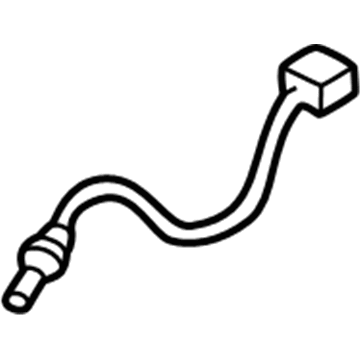
Volvo V70 Coolant Temperature Sensor Part Number: 8653103
$28.73 MSRP: $36.80You Save: $8.07 (22%)Ships in 1-2 Business Days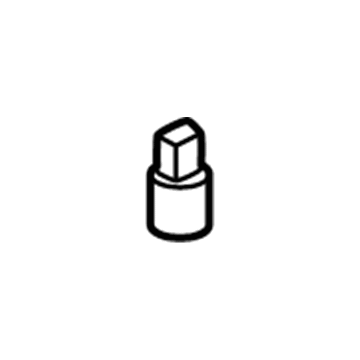
Volvo V70 Temperature Sensor Part Number: 9445153
$37.42 MSRP: $43.82You Save: $6.40 (15%)Ships in 1-2 Business Days

Volvo V70 Coolant Temperature Sensor Part Number: 9186486
$117.18 MSRP: $151.32You Save: $34.14 (23%)Ships in 1-2 Business Days
Volvo V70 Coolant Temperature Sensors
OEM parts are the only choice for top quality and real functionality. They pass strict checks, and they match Volvo's factory specs, so installation is easy. If you need new Coolant Temperature Sensors and you want quality and fit. You will find both here. Our site has a wide range of OEM Volvo V70 parts. The prices are unbeatable, allowing you to get value for money. Each genuine V70 Coolant Temperature Sensors comes with the manufacturer's warranty. That gives you peace of mind. We ship fast to your door. Order today, and enjoy a smooth, no-hassle upgrade with parts that fit right.
Volvo V70 Coolant Temperature Sensors Parts and Q&A
- Q: How to replace coolant temperature sensors on Volvo V70?A:The coolant temperature sensor in the Thermostat housing is used as an engine temperature source signal for the engine management system and the instrument panel temperature gauge. If a fault occurs in the sensor, or if there is a loss of signal because of poor electrical connections a fault code is logged in the engine management system ECU which can be accessed via the diagnostic connector in the centre console using a suitable fault code reader. In the event of a logged fault code, it is important to check the sensor wiring and connector carefully and while testing by substitution with a new unit is an option, further checks should be made using Volvo test equipment by a dealer or a suitably equipped specialist. To start removal, partially drain the cooling system down to just below the level of the sensor unit which is about 2.0 litres. For petrol models up to 2001, remove the two Torx bolts and lift off the thermostat housing cover and disconnect the wiring at the adjacent connector, and unscrew the sensor out of its position in the thermostat housing. For petrol models from 2002, remove the upper timing belt cover by undoing the clips or screws, disconnect the sensor wiring plug and then remove the sensor from the thermostat housing, removing the sensor seal if fitted and making sure to use a new one. For diesel models, pull the plastic cover on top of the engine straight up and disconnect the wiring plug before unscrewing the sensor from the housing, also discard the seal if fitted and replace it with a new one. When refitting, screw in the new sensor unit with a smear of sealant on the threads or new seal as applicable and reconnect the wiring connector and reassemble the thermostat housing making sure the screws are tightened securely. Finally, reconnect radiator hose or re-fit timing belt cover or engine cover as required and top up coolant level as required.
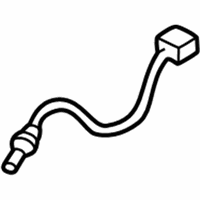
Related Volvo V70 Parts
 Volvo V70 Camshaft Position Sensor
 Volvo V70 Crankshaft Position Sensor
 Volvo V70 Distributor Cap
 Volvo V70 Ignition Coil
 Volvo V70 Mass Air Flow Sensor
 Volvo V70 Oxygen Sensor
 Volvo V70 Throttle Position Sensor
 Volvo V70 Fuel Level Sensor
 Volvo V70 Distributor Rotor
 Volvo V70 Knock Sensor
 Volvo V70 MAP Sensor
 Volvo V70 Spark Plug
Browse by Year
2007 Coolant Temperature Sensors 2006 Coolant Temperature Sensors 2005 Coolant Temperature Sensors 2004 Coolant Temperature Sensors 2003 Coolant Temperature Sensors 2002 Coolant Temperature Sensors 2001 Coolant Temperature Sensors 2000 Coolant Temperature Sensors 1999 Coolant Temperature Sensors 1998 Coolant Temperature Sensors