×
- Hello
- Login or Register
- Quick Links
- Live Chat
- Track Order
- Parts Availability
- RMA
- Help Center
- Contact Us
- Shop for
- Volvo Parts

My Garage
My Account
Cart
Genuine Volvo S40 Drive Belt
Serpentine Belt- Select Vehicle by Model
- Select Vehicle by VIN
Select Vehicle by Model
orMake
Model
Year
Select Vehicle by VIN
For the most accurate results, select vehicle by your VIN (Vehicle Identification Number).
3 Drive Belts found
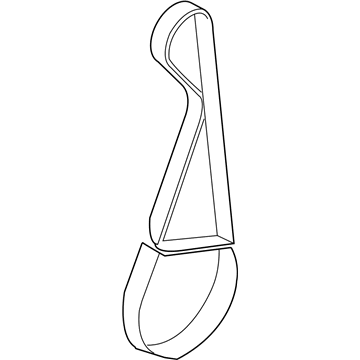
Volvo S40 Serpentine Belt Part Number: 30777531
$32.66 MSRP: $48.67You Save: $16.01 (33%)Ships in 1-2 Business Days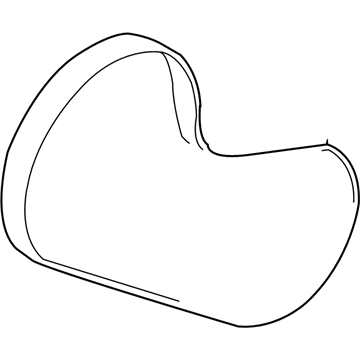
Volvo S40 Serpentine Belt Part Number: 30777530
$32.66 MSRP: $48.67You Save: $16.01 (33%)Ships in 1-2 Business Days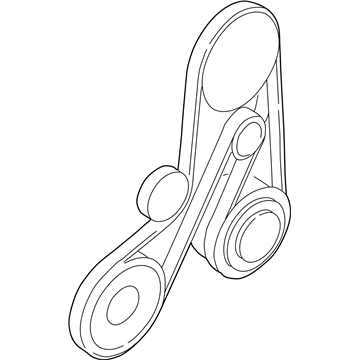
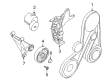
Volvo S40 Serpentine Belt Part Number: 30731808
$32.66 MSRP: $48.67You Save: $16.01 (33%)Ships in 1-2 Business Days
Volvo S40 Drive Belt
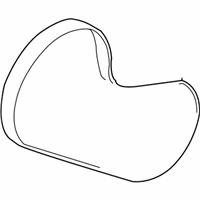
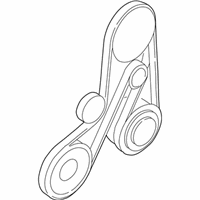
The literal connection of the crankshaft with the vital parts is the Volvo S40 Drive Belt, which enables the engine to drive the alternator, power-steering pump, and air-conditioning compressor without energy wastage. Constructed as an adjustable loop that encloses pulleys, the belt is able to transfer the movement with 90 to 98 percent efficiency, absorb a sudden alteration in loading, and withstand a slight misalignment, which every Volvo owner can attest to during rush hour. The factory belts have a life of about 100,000 miles, but they may fray or crack earlier and hence replacement of the Drive Belt early on will help to avoid the breakage of the parts and even overheating of the engine. Over the years the small Volvo has applied two major belt designs, a short V-belt with the earlier petrol-equipped models and the more recent multi-groove serpentine strip that winds around all the pulleys in a single direction, giving it a better grip, greater flexibility, and the capability to follow complicated routes in the tight S40 engine zone. Both use friction as a grip, though toothed timing-type variants are applied in other systems in order to eliminate any slip. Whether it is in style or not, the Drive Belt has a wide temperature range of minus 35 to 85 degrees Celsius, and that is why it is prepared to start in winter and go through summer on the road. Glazing, splits, or slackness checks once every three to six months keep your Volvo running smoothly and quietly.
OEM parts are the only choice for top quality and real functionality. They pass strict checks, and they match Volvo's factory specs, so installation is easy. If you need new Drive Belt and you want quality and fit. You will find both here. Our site has a wide range of OEM Volvo S40 parts. The prices are unbeatable, allowing you to get value for money. Each genuine S40 Drive Belt comes with the manufacturer's warranty. That gives you peace of mind. We ship fast to your door. Order today, and enjoy a smooth, no-hassle upgrade with parts that fit right.
Volvo S40 Drive Belt Parts and Q&A
- Q:How to inspect and replace drive belts for diesel engines on Volvo S40?A:For 1.6 litre and 2.0 litre (4 cylinder) engines a single drive belt can be found on the right hand side of the engine and 5 cylinder engines have two - one from the crankshaft pulley to the air conditioning compressor and one from the compressor to components such as the alternator. An automatic adjuster eliminates the need for the check of tension, but regular inspection is necessary because of the susceptibility of the belts to fail over time. Accessing the drive belt is easier by raising the front of the vehicle and removing the engine undershield. With the engine off, check for cracks and separation of the drive belt by turning the engine to move the belt to thoroughly examine it. Small cracks on ribbed belts are common and they don't always require replacement. For renewal on 1.6 litre engines, raise the vehicle, remove the engine undershield and wheelarch liner and rotate the tensioner to force the belt off the pulleys. Lock the tensioner in place with a drill bit, remove the old belt and fit the new one, releasing the tensioner and giving tension to the belt. For 2.0 litre engines it's a similar process but involves tension release and locking prior to removing and replacing the belt. For the 5-cylinder engines, after the vehicle is elevated and the undershield is removed, the outer belt is extracted by the tensioner that is turned clockwise, while the inner belt is extracted by the tensioner that is turned anti-clockwise. Before fitting the new belts, make sure the pulley grooves are clean and then reassemble the undershield, wheel arch liner and roadwheel before lowering the vehicle.
- Q:How to inspect and replace the drive belts for petrol engines on Volvo S40?A:On 1.8 and 2.0 litre models, there are two drive belts, which connect the crankshaft pulley to the alternator and coolant pump, and to the air conditioning compressor. 2.4 litre models have two drive belts on the right hand side of the engine. There is an automatic adjuster on the main drive belt for all engines that eliminates the need to check tension; and there is no provision to adjust the air conditioning drive belt on 1.8 and 2.0 litre models. Drive belts should be inspected on a regular basis because they are prone to breaking down over time. For better access, raise the front of the vehicle, remove the wheel on the right and remove the engine undershield if applicable. With the engine shut off, check for cracks and separation of the drive belt, turning the engine to move the belt to check for fraying and glazing. Small cracks in ribbed belts are common and do not necessarily need to be replaced unless there is extensive damage. On 1.8 and 2.0 litre engines, for renewal, loosen the right hand front roadwheel nuts, raise the car, placing it on axle stands, and remove the engine undershield and roadwheel. Remove the wheel arch liner, disconnect the wiring from the air conditioning system, remove the air conditioning compressor to get access to the belt. Release the drive belt tension by using a spanner on the tensioner, keeping in mind the routing before taking off the belt. Install the new drive belt to the crankshaft, alternator and coolant pump making sure it is seated the right way before you release the tensioner. Fit the new belt to the compressor and crankshaft pulleys, replace the protection plate, re-fit the wiring and reassemble the wheel arch liner and engine undershield before lowering the vehicle. For 2.4 litre engines there are similar steps to access the belts to also use a Torx bit to release the tensioners and remove the belts to make sure the pulley grooves are clean before fitting the new belts and checking the placement of the belts before reassembling the vehicle.
Related Volvo S40 Parts
 Volvo S40 Radiator fan
 Volvo S40 Thermostat Housing
 Volvo S40 Water Pump
 Volvo S40 Radiator Cap
 Volvo S40 Coolant Pipe
 Volvo S40 Coolant Pipe Seal
 Volvo S40 Cooling Fan Bracket
 Volvo S40 Idler Pulley Bolt
 Volvo S40 Intercooler Hose
 Volvo S40 Thermostat Gasket
 Volvo S40 Water Hose
 Volvo S40 Water Pump Gasket