×
- Hello
- Login or Register
- Quick Links
- Live Chat
- Track Order
- Parts Availability
- RMA
- Help Center
- Contact Us
- Shop for
- Volvo Parts

My Garage
My Account
Cart
Genuine Volvo V50 Radiator
Cooling Radiator- Select Vehicle by Model
- Select Vehicle by VIN
Select Vehicle by Model
orMake
Model
Year
Select Vehicle by VIN
For the most accurate results, select vehicle by your VIN (Vehicle Identification Number).
2 Radiators found
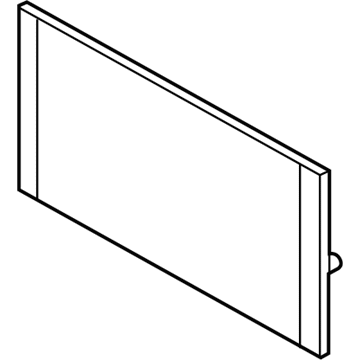
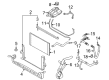
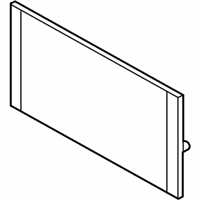
Volvo V50 Radiator Part Number: 36000378
$358.79 MSRP: $543.62You Save: $184.83 (34%)Ships in 1-2 Business DaysVolvo V50 Radiator Part Number: 36000379
$619.87 MSRP: $750.44You Save: $130.57 (18%)Ships in 1-2 Business Days
Volvo V50 Radiator
The Volvo V50 Radiator is created to draw the heat of the engine coolant out and send it to the moving air to ensure that the temperature of the powertrain is maintained to ensure reliable performance. The unit is mounted at the back of the grille and it is applied as an exchanger whereby hot coolant is carried in thin tubes with fins increasing the surface area so that heat transfers into the airflow provided by the fan and vehicle speed. Within each contemporary Volvo cooling loop, a water-based fluid exits the engine via these pipes, releases heat to the fins and returns back to the cooler numerous times in a repeated cycle per drive. Throughout the life of the model line there have been two dominant constructions which have a common flow path although made of different materials. The aluminum core and plastic tanks of most V50 cars are a light system that is resistant to corrosion, dissipates heat easily, and reduces the bulk of front mass and fuel consumption. Some markets had earlier versions with heavier copper or brass tanks, with great conductivity but increased weight and cost. Any leak is damaging to cooling since pressure declines and coolant evaporates, so it is preferable to replace it rather than fix it, though small holes may occasionally be brazed or soldered. Periodic flushing is also advantageous to the Radiator as it removes deposits within the narrow tubes that slow down convection. Subsequent updates of the Volvo had identical fin density, but optimized airflow by making minor grille adjustments. A Radiator in good condition is a mere shield against overheating even on steep climbs. Generally, Volvo owners will have the comfort that the cooling network maintains temperatures that stabilize, guards engine parts, and lengthens the life of the oil.
OEM parts are the only choice for top quality and real functionality. They pass strict checks, and they match Volvo's factory specs, so installation is easy. If you need new Radiator and you want quality and fit. You will find both here. Our site has a wide range of OEM Volvo V50 parts. The prices are unbeatable, allowing you to get value for money. Each genuine V50 Radiator comes with the manufacturer's warranty. That gives you peace of mind. We ship fast to your door. Order today, and enjoy a smooth, no-hassle upgrade with parts that fit right.
Volvo V50 Radiator Parts and Q&A
- Q:How to remove the radiator and the cooling system components on Volvo V50?A:To remove the components of a cooling system, begin by draining the system. For 1.8 and 2.0 litre petrol engines, remove the front bumper, Cooling Fan Assembly and plastic panel under the radiator by undoing 2 screws. Unclip the plastic cover from the bumper mounting bar, undo the mounting bolts, disconnect the wiring plugs and remove the horns. Remove the top air baffle from mounting studs and then undo two Torx screws to remove the bottom air baffle. Suspend the condenser from the bodywork of the vehicle by using cable ties or straps, release the clips and remove the coolant hoses from the two sides of the radiator and then remove the expansion hose. Remove the radiator lower mounting bracket by removing four bolts, then push in the condenser retaining clips and lower the radiator. For an 2.4 litre petrol models, remove the radiator cooling fan, remove the intake duct from the bonnet slam panel and remove the bonnet slam panel from the top of the radiator. Undo the screws to remove the upper part of the radiator mounting, and then lift the air conditioning condenser and support the radiator, and lower it. For diesel engines, this included the front bumper and the plastic bumper bar cover which were removed and the mounting bolt undone and the horns removed whilst disconnecting wiring plugs. Jack up the front of the vehicle securely, remove the engine undershield and disconnect the cooling fan wiring plug. For models with the 2.0 4-cylinder engine, disconnect the charge air pipe from the intake manifold, remove the upper air baffle and the lower air baffle Torx screws. Remove the air hoses from the intercooler, lift the intercooler and lower it along the air baffle. Undo the catch, undo the screw holding the air-conditioning pipe union block to the radiator and pull up the condenser and suspend it from the bodywork. Disconnect the coolant hoses from the radiator, supporting the radiator with help, and lower it so that you can reach the expansion hose and then disconnect it completely. If necessary, remove the cooling fan and shroud, pull the lower mounting bracket from the rubber fittings. For refitting, reverse the removal operations, making sure all hoses are reconnected and taut, and top off the cooling system when done.
Related Volvo V50 Parts
 Volvo V50 Thermostat
 Volvo V50 Water Pump
 Volvo V50 Coolant Pipe
 Volvo V50 Coolant Reservoir Cap
 Volvo V50 Coolant Reservoir Hose
 Volvo V50 Cooling Hose
 Volvo V50 Radiator Cap
 Volvo V50 Radiator Hose
 Volvo V50 Radiator Support
 Volvo V50 Thermostat Gasket
 Volvo V50 Thermostat Housing
 Volvo V50 Water Pump Gasket