×
- Hello
- Login or Register
- Quick Links
- Live Chat
- Track Order
- Parts Availability
- RMA
- Help Center
- Contact Us
- Shop for
- Volvo Parts

My Garage
My Account
Cart
Genuine Volvo V40 Timing Belt
Engine Timing Belt- Select Vehicle by Model
- Select Vehicle by VIN
Select Vehicle by Model
orMake
Model
Year
Select Vehicle by VIN
For the most accurate results, select vehicle by your VIN (Vehicle Identification Number).
1 Timing Belt found
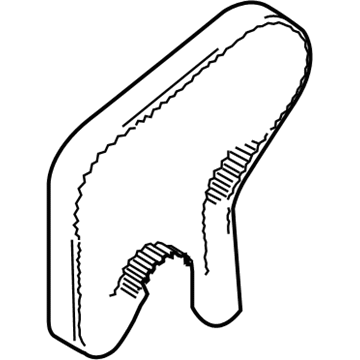
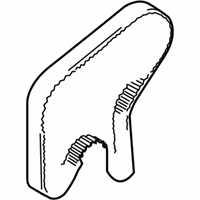
Volvo V40 Timing Belt Part Number: 8627484
$60.91 MSRP: $90.79You Save: $29.88 (33%)Ships in 1-2 Business Days
Volvo V40 Timing Belt
The Volvo V40 Timing Belt ensures that the camshaft and crankshaft work in perfect synchrony to ensure that the engine starts without any problem and that piston-to-valve collisions are avoided. The belt in this overhead-cam design goes around drive pulleys, a tensioner, and idlers to transfer crank rotation directly to the camshaft but is tight enough to avoid any hop in the contact of the teeth. Relative to the older chains or gearboxes that applied to be employed in earlier Volvo engines, the flexible reinforced rubber belt is easily passed through narrow passages, is less noisy, does not require lubrication, and is less expensive, without compromising on reliability. The original belts had a life of around 30,000 miles, but the new ones made of sturdier composites and with curved, low-noise teeth may last as long as 60,000 miles, which gives existing Volvo owners more service time. In spite of improvements, the company continues to record specific change intervals in the owner's manual since a broken belt halts the vehicle on the spot and on interference engines may bend valves or disfigure pistons. Observable cracks, loss of teeth, fraying, or contamination also require instant renewal. On each installation of any new Timing Belt, it is optimal practice to replace all automatic tensioners and idler pulleys to maintain the correct alignment, and since the belt typically turns the water pump, replacing the pump itself would prevent the same work from being done twice. These tips allow any Volvo driver to have a second-generation V40 powerplant that runs quietly and reliably with a Timing Belt.
OEM parts are the only choice for top quality and real functionality. They pass strict checks, and they match Volvo's factory specs, so installation is easy. If you need new Timing Belt and you want quality and fit. You will find both here. Our site has a wide range of OEM Volvo V40 parts. The prices are unbeatable, allowing you to get value for money. Each genuine V40 Timing Belt comes with the manufacturer's warranty. That gives you peace of mind. We ship fast to your door. Order today, and enjoy a smooth, no-hassle upgrade with parts that fit right.
Volvo V40 Timing Belt Parts and Q&A
- Q:How to remove and refit the timing belt automatic tensioner except GDI engine on Volvo V40?A:To remove the automatic belt tensioner, first disconnect the battery negative lead and remove the engine top cover panel, and then the auxiliary drivebelt. Next, undo bolts and remove timing belt upper covers, remembering to undo outer cover bolted and secured by spring clips, and inner cover bolted by two bolts. Position an engine hoist across the engine compartment, fixing it to the right hand engine lifting eyelet, and bring it up to support the engine and transmission. Unbolt both parts of the engine right-hand mounting bracket, releasing refrigerant hoses if there is air conditioning. Remove the auxiliary drivebelt idler pulley and the timing belt lower cover. Jack up the front of the car, prop it on axle stands, and remove the right-hand front roadwheel. Release the fasteners that hold the inner wheel arch liner in place for access to the crankshaft pulley, then remove the belt lower guard if applicable. Hold crankshaft pulley stationary and slacken centre retaining nut on pulley, if necessary use a holding tool. For this purpose rotate the crankshaft in a clockwise direction until the timing marks line up and undo the timing belt tensioner upper retaining bolt and slacken the lower one, moving the tensioner assembly anti-clockwise to release it. Remove the tensioner and pick up the plastic spacer collar. If reusing the belt, mark the running direction of the belt and then slip the belt off the sprockets, tensioner and idler pulleys, taking care not to rotate the crankshaft or camshafts. Check the tensioner and idler pulleys to make sure they are not rough and renew them if needed, as well as the belt pulleys. Inspect the timing belt for signs of wear or contamination and replace it if there is any doubt, especially if the engine has been running for more than 36,000 miles with the current belt on it. Renew the tensioner assembly if there are indications of leaks or if there is no resistance. For refitting purposes, compress and lock the tensioner plunger before fixing it to the engine. Make sure the sprockets are aligned, then slip the belt over the crankshaft sprocket and other components and check the alignment of the sprocket marks before releasing the tensioner. Refit the spacer collar, timing belt inner cover and tighten all the parts, including the crankshaft pulley and auxiliary drivebelt. Reassemble the engine mounting, lower the engine and tighten all bolts to the recommended torque. Finally, refit the roadwheel, lower the car, re-connect the battery negative lead and replace the engine top cover panel. For a manually-adjusted belt tensioner, follow similar removal steps, making sure to slacken the tensioner centre bolt when rotating the pulley to remove tension from the timing belt. Check the condition of the belt and pulleys and renew as necessary. When refitting, make sure that the tensioner is in the right place and that the timing belt is fitted on the right way, adjust the tensioner if need and check the alignment of the sprocket marking after rotating the crankshaft.
Related Volvo V40 Parts
 Volvo V40 Belt Tensioner
 Volvo V40 Camshaft
 Volvo V40 Camshaft Seal
 Volvo V40 Crankshaft Seal
 Volvo V40 Harmonic Balancer
 Volvo V40 Oil Pan
 Volvo V40 Oil Pump Gasket
 Volvo V40 Spool Valve
 Volvo V40 Valve Lifter
 Volvo V40 Valve Spring Retainer Keeper
 Volvo V40 Valve Stem Seal
 Volvo V40 Variable Timing Solenoid