×
- Hello
- Login or Register
- Quick Links
- Live Chat
- Track Order
- Parts Availability
- RMA
- Help Center
- Contact Us
- Shop for
- Volvo Parts

My Garage
My Account
Cart
Genuine Volvo V40 Relay Boxes
Relay Block- Select Vehicle by Model
- Select Vehicle by VIN
Select Vehicle by Model
orMake
Model
Year
Select Vehicle by VIN
For the most accurate results, select vehicle by your VIN (Vehicle Identification Number).
1 Relay Boxes found


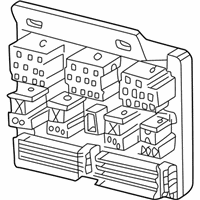
Volvo V40 Relay Box Part Number: 30870947
$33.29 MSRP: $38.98You Save: $5.69 (15%)Ships in 1-2 Business Days
Volvo V40 Relay Boxes
OEM parts are the only choice for top quality and real functionality. They pass strict checks, and they match Volvo's factory specs, so installation is easy. If you need new Relay Boxes and you want quality and fit. You will find both here. Our site has a wide range of OEM Volvo V40 parts. The prices are unbeatable, allowing you to get value for money. Each genuine V40 Relay Boxes comes with the manufacturer's warranty. That gives you peace of mind. We ship fast to your door. Order today, and enjoy a smooth, no-hassle upgrade with parts that fit right.
Volvo V40 Relay Boxes Parts and Q&A
- Q: Where can you find Fuse Box and Relay Boxes, and how can they be accessed and tested on Volvo V40?A:Fuses are in the fusebox behind the bottom cover on the driver's side of the facia panel and more fuses are in the fuse/relay box in the left rear of the engine compartment. Accessing the fusebox requires removing the cover clipping from the drivers side lower facia panel and engine compartment fuses require a retaining clip to be released to remove the cover from the fuse/relay box. The cover gives a listing of circuits protected by each of the fuses. To remove a fuse, turn off the relevant circuit or ignition then using the fuse removal tool attached to the cover pull the fuse out, a blown fuse will have a broken or melted wire. Always replace a fuse with one of the same rating as the fuse on it - the rating is also color coded for easy identification. If there is an immediate fuse blow, investigate the cause, which is likely to be due to faulty insulation, and isolate the defect by testing each circuit. Spare fuses of every rating should be kept in the car. Relays are mostly found behind the driver's side facia lower panel, upper half of the fusebox and a separate holder next to it with the exceptions of the window wiper relay and driver's side window automatic relay. Accessing relays inside the car behind the facia requires the removal of retaining screws and disconnection of the wiring connector from the footlight, whereas those in the engine compartment can be accessed by removing the cover from the fuse/relay box. To test a relay, try to operate the system; a functioning relay will click when energized which will indicate the fault is somewhere else if it does not. Replacing a relay is done by ensuring that the ignition is off then removing the old relay and pushing in the new one, since relays are designed to be push-fit into their holders.
Related Volvo V40 Parts
 Volvo V40 Camshaft Position Sensor
 Volvo V40 Fuse Box
 Volvo V40 Mass Air Flow Sensor
 Volvo V40 Ignition Coil
 Volvo V40 Crankshaft Position Sensor
 Volvo V40 Engine Control Module
 Volvo V40 Junction Boxes
 Volvo V40 MAP Sensor
 Volvo V40 Oxygen Sensor
 Volvo V40 Rear Window Defroster Relay
 Volvo V40 Spark Plug Wire
 Volvo V40 Throttle Position Sensor