×
- Hello
- Login or Register
- Quick Links
- Live Chat
- Track Order
- Parts Availability
- RMA
- Help Center
- Contact Us
- Shop for
- Volvo Parts

My Garage
My Account
Cart
Genuine Volvo S70 Turbocharger
Turbo- Select Vehicle by Model
- Select Vehicle by VIN
Select Vehicle by Model
orMake
Model
Year
Select Vehicle by VIN
For the most accurate results, select vehicle by your VIN (Vehicle Identification Number).
2 Turbochargers found
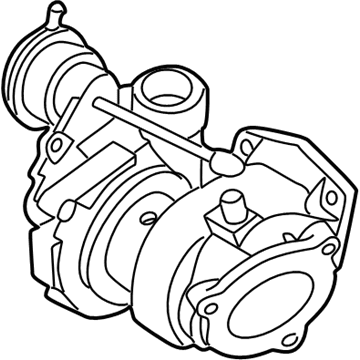
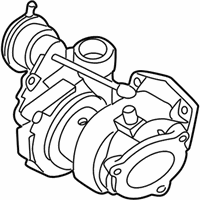
Volvo S70 Turbocharger Part Number: 8602396
$996.79 MSRP: $1273.16You Save: $276.37 (22%)Ships in 1-2 Business DaysVolvo S70 Turbocharger Part Number: 8601692
$604.83 MSRP: $725.88You Save: $121.05 (17%)Ships in 1-2 Business Days
Volvo S70 Turbocharger
The Volvo S70 Turbocharger allows the five-cylinder engine to breathe more deeply by utilizing waste exhaust energy to squeeze additional air into the cylinders, significantly increasing power without the necessity to have a larger engine. The Turbocharger is divided into two parts, which include a turbine side that rotates upon the release of exhaust gases out of the combustion chambers, as well as a compressor side, which also forces a denser charge into the intake to increase volumetric efficiency so more fuel combusts cleanly to give additional torque. Since it is driven by exhaust flow as opposed to the crankshaft belt, it generates power at minimal cost to fuel economy, and this fact suits Volvo's objectives in creating energetic but sensible family sedans. The initial S70 models applied a simple single-scroll Turbocharger design that can lag as pressure accumulates, but the wider turbo world has since moved on to twin-scroll, variable-geometry and even electrically assisted designs, which reduce response time by getting the turbine moving earlier, showing the evolutionary route Volvo can follow in upgrading the model. All Turbochargers, regardless of style, have the same primary mission, that of repurposing otherwise unused heat as compressed air to enable the engine to act like a significantly larger unit while still passing tightening emissions tests. Normal driving is thus more powerful throughout the rev range, and overtaking on highways becomes less of a problem without losing the good breeding required in a Volvo.
OEM parts are the only choice for top quality and real functionality. They pass strict checks, and they match Volvo's factory specs, so installation is easy. If you need new Turbocharger and you want quality and fit. You will find both here. Our site has a wide range of OEM Volvo S70 parts. The prices are unbeatable, allowing you to get value for money. Each genuine S70 Turbocharger comes with the manufacturer's warranty. That gives you peace of mind. We ship fast to your door. Order today, and enjoy a smooth, no-hassle upgrade with parts that fit right.
Volvo S70 Turbocharger Parts and Q&A
- Q:How to remove and refit a turbocharger on Volvo S70?A:To remove the turbocharger, first disconnect the battery negative lead and empty the cooling system. Next, remove the bolts and heat shield over the turbocharger, remove the upper air inlet pipe and rubber hose from the turbocharger inlet. Disconnect the fresh air inlet hose from the side of the turbocharger and take off the second heat shield. Undo the upper coolant return pipe and oil inlet pipe unions and recover the seals. Apply the handbrake, jack up the front of the car and place it on axle stands. Remove the clamp bracket that holds the oil feed and return pipes, and separate the oil return pipe flange joint from the base of the turbocharger. Undo the lower nuts holding the turbocharger to the exhaust manifold, and the one lower nut to the exhaust front pipe. Remove the support bracket bolt, lower the car and remove the remaining nuts that hold the front pipe to the turbocharger. Undo the coolant inlet pipe union and recover the seals, and ease the turbocharger off its manifold studs. Lift the unit upwards and disconnect the boost pressure hose, bypass valve hose and pressure regulator hose, recording their locations for re-fitting. Finally, take the turbocharger out of the car and the gaskets. For refitting, reverse the removal steps while taking care that you return any studs you removed them to their original locations with appropriate thread sealer. Clean turbocharger and manifold mating faces, fit new manifold gasket and new seals on all disturbed unions, tighten all nuts and bolts to specified torque, and refill the cooling system on completion.
- Q:What is the function and operation of a water-cooled turbocharger in enhancing engine efficiency on Volvo S70?A:A water-cooled turbocharger is used in all turbo models, and this improves efficiency in the engine by raising the pressure of the air/fuel mix in the inlet manifold above atmospheric and actually forcing it into the cylinders. The turbocharger uses energy from the exhaust gas to spin a turbine wheel attached to a shaft, which in turn spins a compressor wheel that compresses the air that is being sucked into the engine. After being passed through the turbocharger, the compressed air is cooled in an intercooler, reducing the temperature to improve efficiency and minimize the risk of detonation. Boost pressure in the inlet manifold is controlled by a wastegate that diverts the exhaust gasses based on signals from a pressure sensitive actuator controlled by the turbocharger valve and the fuel system electronics control unit. The turbo shaft is lubricated by oil from the engine main gallery floating on an oil cushion with a drain pipe returning oil to the sump. Water cooling keeps the operating temperature of the turbo bearings lower and the water circulates after engine shuts down using convection to help cooling. Precautions are necessary because of the high speeds and temperatures of the turbocharger: avoid operation with exposed parts to prevent damage or injury, avoid racing the engine immediately after start-up, as this will allow the oil to circulate, and do not shut off the engine until it returns to idle, which will ensure that the turbocharger is lubricated, idle for several minutes after high speed runs, and follow recommended oil and filter change intervals, and use quality oil to prevent carbon build-up and possible failure.
Related Volvo S70 Parts
 Volvo S70 Air Filter
 Volvo S70 Fuel Pump
 Volvo S70 Accelerator Cable
 Volvo S70 Air Duct
 Volvo S70 Air Filter Box
 Volvo S70 Fuel Filler Hose
 Volvo S70 Fuel Filler Neck
 Volvo S70 Fuel Injector
 Volvo S70 Fuel Rail
 Volvo S70 Fuel Tank
 Volvo S70 Fuel Tank Strap
 Volvo S70 Throttle Cable