×
- Hello
- Login or Register
- Quick Links
- Live Chat
- Track Order
- Parts Availability
- RMA
- Help Center
- Contact Us
- Shop for
- Volvo Parts

My Garage
My Account
Cart
Genuine Volvo S70 Fuel Tank
Gas Tank- Select Vehicle by Model
- Select Vehicle by VIN
Select Vehicle by Model
orMake
Model
Year
Select Vehicle by VIN
For the most accurate results, select vehicle by your VIN (Vehicle Identification Number).
3 Fuel Tanks found
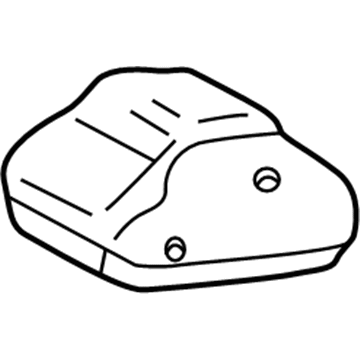
Volvo S70 Expansion Tank Part Number: 9471402
$126.00 MSRP: $161.44You Save: $35.44 (22%)Ships in 1-2 Business Days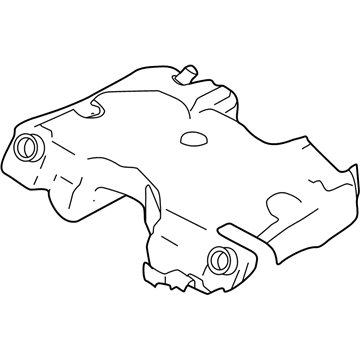
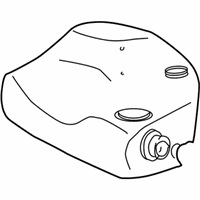
Volvo S70 Fuel Tank Part Number: 9445482
$575.87 MSRP: $685.56You Save: $109.69 (16%)Ships in 1-2 Business Days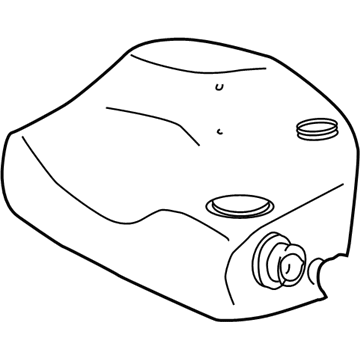
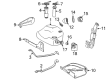
Volvo S70 Fuel Tank Part Number: 8631059
Volvo S70 Fuel Tank
OEM parts are the only choice for top quality and real functionality. They pass strict checks, and they match Volvo's factory specs, so installation is easy. If you need new Fuel Tank and you want quality and fit. You will find both here. Our site has a wide range of OEM Volvo S70 parts. The prices are unbeatable, allowing you to get value for money. Each genuine S70 Fuel Tank comes with the manufacturer's warranty. That gives you peace of mind. We ship fast to your door. Order today, and enjoy a smooth, no-hassle upgrade with parts that fit right.
Volvo S70 Fuel Tank Parts and Q&A
- Q:What precautions should be observed before working on the fuel tank on Volvo S70?A:Before working on any component within the fuel system take the necessary precautions. In order to remove the tank, first drain as much fuel as possible to minimize risks associated with fuel handling. Disconnect the negative lead to the battery, and then use a hand pump or a siphon through the filler neck to suck out anything left in the lines. Alternatively, chock the front wheels, jack the rear of the vehicle up and support it on axle stands. Place a large capacity container beneath the fuel filter, clean the fuel inlet quick-release coupling and disconnect it while standing ready for a first release of fuel. Keeping the fuel in a suitable sealed container. Next, remove the circlip that holds the filler neck, place a trolley jack underneath the tank and raise it just high enough to remove the weight. Undo the tank retaining straps, lower the jack slightly and disconnect the vent hoses. Remove the tank from under the car, Clean out tank (contaminated) with clean fuel after removing gauge sender unit and Fuel Pump. If the tank is damaged, it should be renewed, although some minor repairs are possible. When fitting a new tank, from the old one transfer all the components, renewing the filler tube seal and tightening seals and plastic nuts. For refitting, find the tank and tighten the strap mountings at the rear, center the fuel gauge sender unit and fuel pump and tighten the strap mountings in the front. Lubricate the filler neck seals to ensure they are in the right place, and that the drain tube is in the right place. Finally, add fuel to the tank and check it thoroughly for any leaks before driving.
Related Volvo S70 Parts
 Volvo S70 Fuel Pump
 Volvo S70 Accelerator Cable
 Volvo S70 Fuel Filler Hose
 Volvo S70 Fuel Filler Neck
 Volvo S70 Fuel Hose
 Volvo S70 Fuel Line Clamps
 Volvo S70 Fuel Sending Unit
 Volvo S70 Fuel Tank Skid Plate
 Volvo S70 Fuel Tank Strap
 Volvo S70 Gas Cap
 Volvo S70 Shut Off Valve
 Volvo S70 Throttle Cable
Browse by Year
2000 Fuel Tank 1999 Fuel Tank 1998 Fuel Tank