×
- Hello
- Login or Register
- Quick Links
- Live Chat
- Track Order
- Parts Availability
- RMA
- Help Center
- Contact Us
- Shop for
- Volvo Parts

My Garage
My Account
Cart
Genuine Volvo S70 Timing Belt
Engine Timing Belt- Select Vehicle by Model
- Select Vehicle by VIN
Select Vehicle by Model
orMake
Model
Year
Select Vehicle by VIN
For the most accurate results, select vehicle by your VIN (Vehicle Identification Number).
4 Timing Belts found
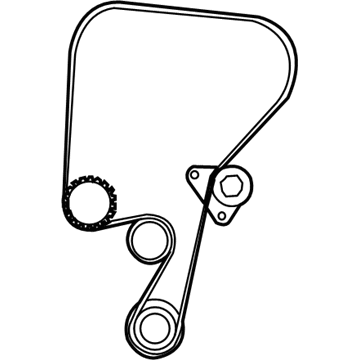
Volvo S70 Timing Belt Part Number: 30731727
$248.15 MSRP: $375.99You Save: $127.84 (34%)Ships in 1-2 Business Days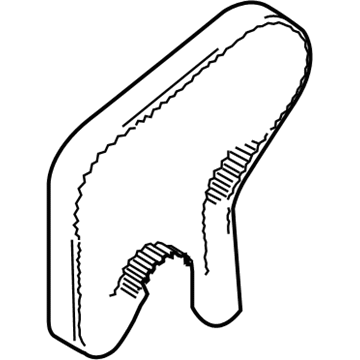
Volvo S70 Timing Belt Part Number: 8627484
$60.91 MSRP: $90.79You Save: $29.88 (33%)Ships in 1-2 Business Days
Volvo S70 Timing Belt Kit Part Number: 30758260
$180.74 MSRP: $311.19You Save: $130.45 (42%)Ships in 1-2 Business DaysVolvo S70 Timing Belt Kit Part Number: 30758261
$248.15 MSRP: $375.99You Save: $127.84 (34%)Ships in 1-2 Business Days
Volvo S70 Timing Belt
The Volvo S70 Timing Belt makes sure that the crankshaft and camshafts turn simultaneously to the correct degree, such that the valves open and close precisely when the pistons are going up and down to provide smooth power and eliminate expensive internal collisions. The belt inside each S70 connects the crankshaft pulley with the cam gear and is held in place by dedicated tensioner and idler pulleys, a design that ensures valve timing remains locked even at high RPM. Previously, Volvo powerplants applied chains or gears, but soon Volvo switched to a fiber-reinforced rubber belt, as it can easily bend around overhead-cam configurations, is noise free, does not require an oil bath, and is less expensive. Improvements in materials have extended the recommended service intervals from about 30000 miles to 60000 miles or more, but Timing Belt replacement is very costly due to the engine stalling instantaneously when a belt breaks on interference designs, which causes the pistons and open valves to collide. An aged tensioner can allow the belt to bounce around when running and result in rough running long before complete failure. The Timing Belt is even quieter and tougher as modern Volvo belts have curved teeth to provide additional durability and reduced noise. When installing a new Timing Belt, intelligent owners also replace automatic tensioners, idler pulleys, and the water pump as the belt commonly drives the water pump and the latter components are located behind the same covers. Examine the belt for cracks, missing teeth, frayed fibers, or oil contamination, and never use it again when the mileage or condition dictates that it should be changed.
OEM parts are the only choice for top quality and real functionality. They pass strict checks, and they match Volvo's factory specs, so installation is easy. If you need new Timing Belt and you want quality and fit. You will find both here. Our site has a wide range of OEM Volvo S70 parts. The prices are unbeatable, allowing you to get value for money. Each genuine S70 Timing Belt comes with the manufacturer's warranty. That gives you peace of mind. We ship fast to your door. Order today, and enjoy a smooth, no-hassle upgrade with parts that fit right.
Volvo S70 Timing Belt Parts and Q&A
- Q:How to renew the timing belt on Volvo S70?A:At the time of writing, no information was available on the variable valve timing system fitted to later 2.5 litre engines, and these can be identified by a large hub assembly bolted to the front camshaft sprocket, whilst there is likely no effect to the procedure for renewing the timing belt, consulting the Volvo dealer for advice is recommended. Starting from disconnecting the battery negative lead and removing the auxiliary drivebelt. For later models without a distributor, loosen the screws and spring clips holding the upper cover of the timing belt, and unclip the upper cover from the spark plug cover. If applicable, release the turbocharger inlet ducting and remove the spark plug cover. Lift the cooling system expansion tank out of its bracket, disconnect coolant level sensor wiring and do not disconnect coolant hoses. Release the power steering fluid reservoir from its mountings and keep it upright so that no fluid is spilled. Access to the ECU may be made easier by removing the ECU box lid. Undo the bolt from the timing belt front cover, and pull it back from the engine, and up to release the retraining clips. Loosen the right-hand front wheel bolts, jack up the car and remove the right-hand front roadwheel. Remove the nuts that hold the inner wheel arch liner in place and fold the liner back for access to the crankshaft pulley. Remove the timing belt guard plate from the back of the crankshaft pulley if fitted. Temporarily re-fit the timing belt upper cover on the later models and turn the crankshaft clockwise until the timing marks on the camshaft sprocket rims align with the notches on the timing belt cover. Make sure that the timing mark in the crankshaft sprocket aligns with the projection in the oil pump housing. The timing marks can be faint and will require careful alignment. Remove the crankshaft pulley, which is held by four bolts and a central nut, use a home-made sprocket holding tool to help to loosen the central nut. Check alignment of timing belt sprockets before removing pulley and be careful as pulley is located on a roll pin. Loosen the timing belt tensioner retaining bolt and turn the timing belt tensioner assembly to relieve tension on the belt. If you are fitting a new belt, take off the tensioner completely. If you reuse the belt, mark the direction it is running then slip the belt off the sprockets and idler pulleys. Check the idler pulley for roughness and check the timing belt for wear or splitting, replacing it if necessary. If the engine has more than 36,000 miles with the existing belt, renew it whether or not over it is in good condition. Check the old belt for oil or coolant contamination and rectify any leaks. Examine the coolant pump for leaks as a failing pump may necessitate removing the timing belt again if you do not replace it at the same time. Renew the tensioner assembly if there are doubts about the condition of the assembly. Before refitting the timing belt make sure the sprockets are in the correct positions, also temporarily refit the timing belt rear cover if necessary. Refit the belt tensioner in the noted position and lightly tighten the holding bolt. Slip the belt over the crankshaft sprocket and keep it taut while feeding the belt over the idler pulley and camshaft sprockets. Recheck the alignment of the sprocket marks and then rotate the belt tensioner anti-clockwise until the pointer reaches stop and align it with the central notch and tighten the retaining bolt. Check the movement of the tensioner pointer and rotate the crankshaft clockwise two revolutions to see if all the timing marks can be aligned. If the tensioner pointer is out of alignment, reset the belt tension. Refit timing belt guard plate, crankshaft pulley and tighten central nut and outer bolts to given torques. Attach the wheel arch liner and roadwheel and then bring the car down and tighten the wheel bolts in a diagonal pattern. Finally refit all remaining components that were removed for access.
Related Volvo S70 Parts
 Volvo S70 Oil Filter
 Volvo S70 Cam Gear
 Volvo S70 Crankshaft Pulley
 Volvo S70 Crankshaft Thrust Washer
 Volvo S70 Engine Cover
 Volvo S70 Exhaust Valve
 Volvo S70 Oil Filler Cap
 Volvo S70 Oil Filter Housing
 Volvo S70 Timing Cover
 Volvo S70 Valve Cover
 Volvo S70 Valve Spring
 Volvo S70 Valve Stem Seal