×
- Hello
- Login or Register
- Quick Links
- Live Chat
- Track Order
- Parts Availability
- RMA
- Help Center
- Contact Us
- Shop for
- Volvo Parts

My Garage
My Account
Cart
Genuine Volvo S70 Thermostat
Engine Coolant Thermostat- Select Vehicle by Model
- Select Vehicle by VIN
Select Vehicle by Model
orMake
Model
Year
Select Vehicle by VIN
For the most accurate results, select vehicle by your VIN (Vehicle Identification Number).
1 Thermostat found

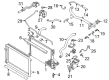
Volvo S70 Thermostat Part Number: 271664
$32.40 MSRP: $48.29You Save: $15.89 (33%)Ships in 1-2 Business Days
Volvo S70 Thermostat
The Volvo S70 Thermostat ensures that the engine does not leave its comfort zone and hence the car warms within a short period; however, the car never overheats even when on a long journey. The Thermostat is mounted in a casing next to the radiator and measures the heat of the Volvo coolant and opens or closes a valve to allow the coolant to go through the radiator or bypass it to maintain a temperature close to the optimum temperature set-point. Early years of production S70 were equipped with a tough bimetal strip Thermostat that folds when heated, whereas the later models of Volvo utilized a wax pellet type whose growing wax presses a plunger for more refined and fine action. Response quality is the primary distinction, with a higher range of modulation by wax units and more sealing, which leads to more constant gauge readings and slightly better fuel economy. Both versions operate mechanically without electronics, i.e., the device responds immediately and returns to its position even in the event of a battery loss. In case of a valve leaking open, drivers might complain of slow cabin heating and low mileage, but when the valve is stuck closed, the temperature warning indicator might flash in minutes, thus valve replacement is essential to Volvo ownership peace of mind. Although this Thermostat is small, it is the center of the cooling system and keeps all the aluminum heads, motor oil and gaskets cool and free of heat as well as makes sure all Volvos are giving good service in traffic or on the highway.
OEM parts are the only choice for top quality and real functionality. They pass strict checks, and they match Volvo's factory specs, so installation is easy. If you need new Thermostat and you want quality and fit. You will find both here. Our site has a wide range of OEM Volvo S70 parts. The prices are unbeatable, allowing you to get value for money. Each genuine S70 Thermostat comes with the manufacturer's warranty. That gives you peace of mind. We ship fast to your door. Order today, and enjoy a smooth, no-hassle upgrade with parts that fit right.
Volvo S70 Thermostat Parts and Q&A
- Q:How does an aging thermostat affect water temperature response and what steps should be taken to assess and test its functionality on Volvo S70?A:A thermostat can also become slower to react to changes in water temperature as it ages, and can become stuck in the open or closed state, which is potentially problematic, like slow warming or overheating. It is worthwhile to verify the quantity of coolant before arriving at such a conclusion due to the possibility of an air-lock caused by a leakage or incorrect filling of the coolant, which could result in a failure of a cooling system. In case the engine is slow to warm up, the thermostat may be left stuck or could be completely absent and cause the engine management system to stay in the warm-up mode despite being unnecessary, which will impact emission and fuel economy adversely. When the engine overheats and the Radiator top hose is not hot, the thermostat is probably plugged, so that the coolant does not escape to the radiator and should be replaced. On the other hand, when the top hose has hot meaning it is coolant flowing, then it means that the thermostat is open. In order to test the operation of the thermostat, without dismantling it, one may test the radiator top hose temperature by opening the coolant temperature gauge and having a cold engine; the temperature of the top hose should be cold at first and then cold water should quickly pass through the radiator top hose as the thermostat opens. In case the system is not functioning the way it should, then the thermostat must be taken away and tested. Make sure the engine is thoroughly cold, and partially empty the cooling system, disconnect the hoses in the thermostat housing, and unscrew the retaining bolts to detach the thermostat housing and the thermostat. To measure the thermostat, measure the temperature pointer, make some water hot to the same temperature as the setting and put the thermostat in the hot water so that it should open fully in two minutes. Once it has cooled down, ensure that it closes properly, in case it cannot do it properly, replace it. In refitting a plug, remove old sealing ring, use a new sealing ring, tighten the thermostat and housing with bolts, reconnect hoses, and refill the cooling system.

Related Volvo S70 Parts
 Volvo S70 Radiator
 Volvo S70 Coolant Reservoir Cap
 Volvo S70 Coolant Reservoir Hose
 Volvo S70 Cooling Hose
 Volvo S70 Fan Mounting Bracket
 Volvo S70 Fan Shroud
 Volvo S70 Radiator Cap
 Volvo S70 Radiator Fan Relay
 Volvo S70 Thermostat Gasket
 Volvo S70 Thermostat Housing
 Volvo S70 Water Hose
 Volvo S70 Water Pump Gasket