×
- Hello
- Login or Register
- Quick Links
- Live Chat
- Track Order
- Parts Availability
- RMA
- Help Center
- Contact Us
- Shop for
- Volvo Parts

My Garage
My Account
Cart
Genuine Volvo CV Joint Boot
Constant-Velocity Joint Boot- Select Vehicle by Model
- Select Vehicle by VIN
Select Vehicle by Model
orMake
Model
Year
Select Vehicle by VIN
For the most accurate results, select vehicle by your VIN (Vehicle Identification Number).
32 CV Joint Boots found
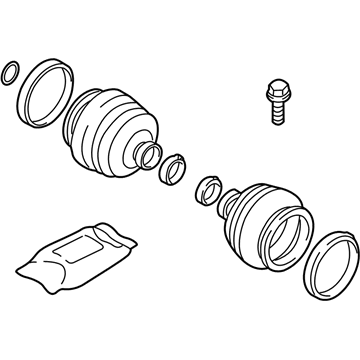

Volvo Boots Part Number: 31256221
$50.56 MSRP: $75.35You Save: $24.79 (33%)Ships in 1-2 Business DaysProduct Specifications- Other Name: Bellows Kit; CV Joint Boot; Boot
Volvo Boots Part Number: 31256231
$50.56 MSRP: $75.35You Save: $24.79 (33%)Ships in 1-2 Business DaysProduct Specifications- Other Name: Bellows Kit; CV Joint Boot; Boot
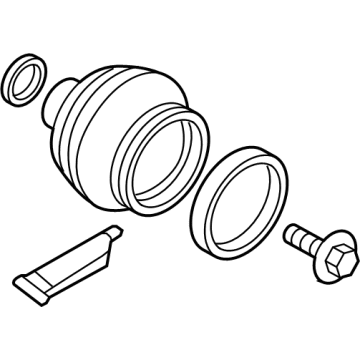
Volvo Boot Kit Part Number: 32339711
$71.45 MSRP: $107.37You Save: $35.92 (34%)Ships in 1-2 Business DaysProduct Specifications- Other Name: Bellows Kit; CV Joint Boot; Inner CV Joint Boot
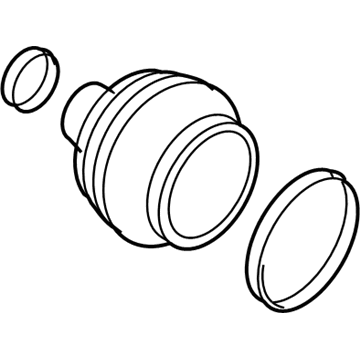
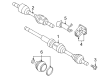
Volvo Boot Kit, Front Part Number: 30759410
$71.45 MSRP: $107.37You Save: $35.92 (34%)Ships in 1-2 Business DaysProduct Specifications- Other Name: Bellows Kit; CV Joint Boot Kit, Front Inner; Boot, Boot Kit, Inner Boot
- Position: Front
Volvo Boot Kit, Front Part Number: 30759411
$71.45 MSRP: $107.37You Save: $35.92 (34%)Ships in 1-2 Business DaysProduct Specifications- Other Name: Bellows Kit; CV Joint Boot Kit, Front Inner; Boot, Boot Kit, Inner Boot
- Position: Front
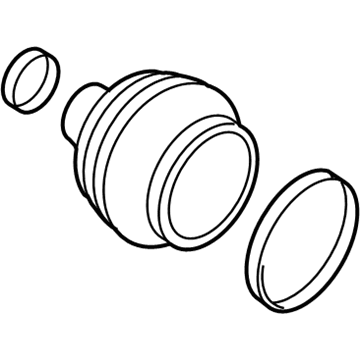
Volvo Inner Boot, Passenger Side Part Number: 31325679
$71.45 MSRP: $107.37You Save: $35.92 (34%)Ships in 1-2 Business DaysProduct Specifications- Other Name: Bellows Kit; CV Joint Boot; Boot, Inner Boot
- Position: Passenger Side
Volvo Boot Kit, Passenger Side Part Number: 31367795
$71.45 MSRP: $107.37You Save: $35.92 (34%)Ships in 1-2 Business DaysProduct Specifications- Other Name: Bellows Kit; CV Joint Boot; Boot, Boot Kit
- Position: Passenger Side
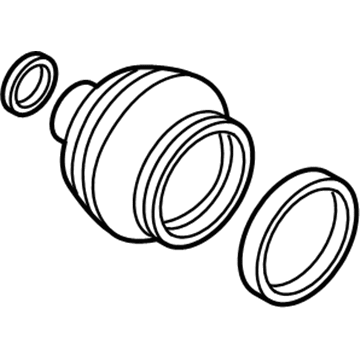

Volvo Outer Boot Part Number: 31437219
$71.45 MSRP: $107.37You Save: $35.92 (34%)Ships in 1-2 Business DaysProduct Specifications- Other Name: Bellows Kit; CV Joint Boot; Boot
- Position: Outer
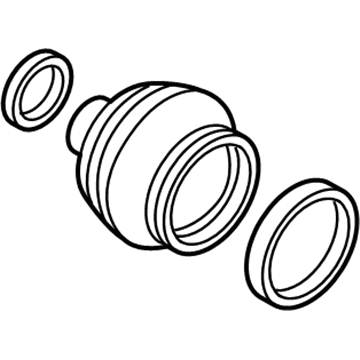
Volvo Inner Boot Part Number: 31437220
$71.45 MSRP: $107.37You Save: $35.92 (34%)Ships in 1-2 Business DaysProduct Specifications- Other Name: Bellows Kit; CV Joint Boot; Boot
- Position: Inner
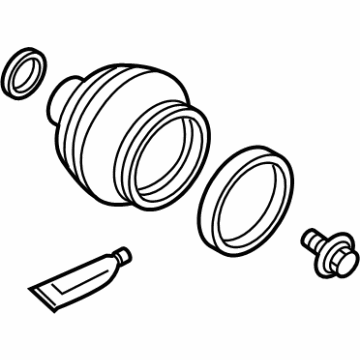
Volvo Outer Boot Part Number: 31437947
$71.45 MSRP: $107.37You Save: $35.92 (34%)Ships in 1-2 Business DaysProduct Specifications- Other Name: Bellows Kit; CV Joint Boot; Boot
- Position: Outer

Volvo Inner Boot Part Number: 31437948
$71.45 MSRP: $107.37You Save: $35.92 (34%)Ships in 1-2 Business DaysProduct Specifications- Other Name: Bellows Kit; CV Joint Boot; Boot
- Position: Inner
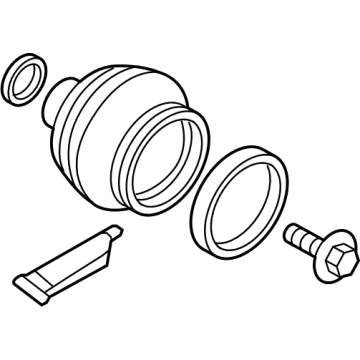

Volvo Boot Kit Part Number: 31492052
$71.45 MSRP: $107.37You Save: $35.92 (34%)Ships in 1-2 Business DaysProduct Specifications- Other Name: Bellows Kit; CV Joint Boot; Boot, Inner Boot, Inner CV Joint Boot, Outer Boot


Volvo Boot Kit Part Number: 32240025
$71.45 MSRP: $107.37You Save: $35.92 (34%)Ships in 1-2 Business DaysProduct Specifications- Other Name: Bellows Kit; CV Joint Boot; Boot
Volvo Boot Kit Part Number: 32324097
$71.45 MSRP: $107.37You Save: $35.92 (34%)Ships in 1-2 Business DaysProduct Specifications- Other Name: Bellows Kit; CV Joint Boot; Boot, Outer Boot, Outer CV Joint Boot
Volvo Outer CV Joint Boot Part Number: 32324374
$71.45 MSRP: $107.37You Save: $35.92 (34%)Ships in 1-2 Business DaysProduct Specifications- Other Name: Bellows Kit; CV Joint Boot; Boot, Inner Boot, Outer Boot
- Position: Outer
Volvo Boot Kit Part Number: 32339712
$71.45 MSRP: $107.37You Save: $35.92 (34%)Ships in 1-2 Business DaysProduct Specifications- Other Name: Bellows Kit; CV Joint Boot; Boot, Outer CV Joint Boot
Volvo Boot Kit, Front Part Number: 30759413
$83.99 MSRP: $126.20You Save: $42.21 (34%)Ships in 1-2 Business DaysProduct Specifications- Other Name: CV Joint Boot Kit, Front Left Outer, Right Outer; Boot, Boot Kit, Outer Boot
- Position: Front
Volvo Boot Kit Part Number: 30759414
$91.09 MSRP: $107.54You Save: $16.45 (16%)Ships in 1-2 Business DaysProduct Specifications- Other Name: Bellows Kit; CV Joint Boot; Boot


Volvo Boot Kit Part Number: 31367041
$83.99 MSRP: $126.20You Save: $42.21 (34%)Ships in 1-2 Business DaysProduct Specifications- Other Name: Bellows Kit; CV Joint Boot; Boot, Outer Boot
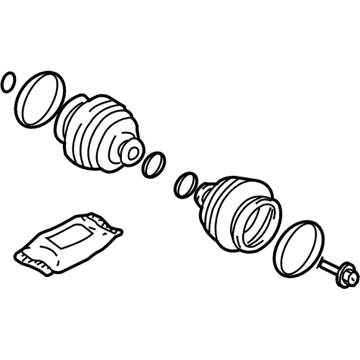
Volvo Boot Kit Part Number: 30788265
$95.26 MSRP: $143.15You Save: $47.89 (34%)Ships in 1-2 Business DaysProduct Specifications- Other Name: Bellows Kit; CV Joint Boot; Boot, Outer Boot
| Page 1 of 2 |Next >
1-20 of 32 Results
Volvo CV Joint Boot
The Volvo CV Joint Boot helps protect the moving joint so the grease stays in, the grit stays out, and every drive is smooth. Volvo began building vehicles in 1927, and since then the brand has developed a reputation for good old-fashioned Swedish engineering, clean design, and a deep regard for safety that includes innovations like the three-point seat belt and responsive braking systems. Across highways worldwide, Volvo is synonymous with durability and forward-thinking electric research that makes everyday travel cleaner. Drivers love the way Volvo combines simple dashboard controls with modern powertrains to balance comfort, sustainability, and performance across its cars, trucks, and buses. Equal care is seen in the Volvo CV Joint Boot, a flexible sleeve that seals the constant velocity joint on each axle, permitting the wheels to turn and rise with the suspension without shaking the driveline. This is a small barrier that bends with every steering angle and traps the heavy grease that cushions the precision bearings and blocks water or dirt that could grind the joint apart. Two material choices, a supple rubber blend and a tougher thermoplastic case, allow owners to match local climate demands while still meeting exact factory specs. A healthy CV Joint Boot is essential for smooth acceleration and tight steering and helps prolong its signature reliability that keeps a Volvo rolling trouble-free for years.
Trust OEM CV Joint Boot for quality that holds up. These parts use top-tier materials to keep your ride running smooth. Because they match exact Volvo specs, you get a flawless fit and a hassle-free install every single time. No more fighting with parts that just won't line up. It is easy to search our massive stock of genuine Volvo options at prices you will really like. Every part comes with a real manufacturer's warranty and a simple return policy. Plus, we ship fast to get your order to you. Shop with confidence and give your Volvo the reliability it deserves.
Volvo CV Joint Boot Parts and Q&A
- Q: What role do CV Joint and CV Joint Boot play in vehicle maintenance, and how should they be inspected and maintained for petrol engines on Volvo S40?A:The driveshaft rubber gaiters have an important role in ensuring that dirt, water and other foreign materials are prevented from entering and damaging the joints since external contamination may cause premature deterioration of the gaiter material, and it is advisable, therefore, to wash the gaiters in soap and water from time to time. When the vehicle is raised and firmly supported on the axle stands, if the steering is turned to full-lock condition, one can thoroughly inspect the outer constant velocity (CV) joint rubber gaiters by making a 360-degree rotation to each of the front wheels and squeezing the gaiters to determine if they have cracks, splits, or deterioration that could lead to grease escape and the ingress of water and grit. It's also important to check the security and condition of the retaining clips, and also do the same on the inner tripod joints. If any damage or deterioration is found the gaiters should be replaced. Additionally, the general condition of the outer CV joints should be assessed by holding the driveshaft and trying to rotate the wheels and then doing the same for the inner joints by holding the inner joint yoke and trying to rotate the driveshaft. Any noticeable movement in the joint may indicate wear in the joint, wear in the driveshaft splines or a loose driveshaft retaining nut.
- Q: How to inspect the condition of CV Joint Boots and assess the general condition of the CV joints for petrol engines on Volvo V70?A:With the vehicle elevated and well supported on axle stands, rotate the steering to full lock and gradually rotate the roadwheel. Inspect the condition of the outer CV joint boot by squeezing it to open out the folds to see if there are signs of cracking, splits or deterioration that can allow grease to escape and water and grit into the joint. Also, check the security and condition of the retaining clips and repeat these checks on the inner CV joints. If any damage or deterioration is found, the CV joint boots should be renewed. At the same time, check the overall condition of the CV joints by holding the driveshaft and trying to rotate the wheel, and then holding the inner joint and trying to rotate the driveshaft. Any appreciable movement indicates wear in the joints, wear in the driveshaft splines or a loose driveshaft retaining bolt or nut.
Related Volvo Parts
 Volvo Axle Shaft
 Volvo Differential
 Volvo Axle Shaft Seal
 Volvo Differential Bearing
 Volvo Differential Cover
 Volvo Differential Seal
 Volvo Driveshaft
 Volvo Driveshaft Center Support Bearing
 Volvo Ring And Pinion
 Volvo Universal Joints
Browse by Model
C30 CV Joint Boot C40 Recharge CV Joint Boot C70 CV Joint Boot S40 CV Joint Boot S60 Cross Country CV Joint Boot S60 CV Joint Boot S80 CV Joint Boot S90 CV Joint Boot V50 CV Joint Boot V60 Cross Country CV Joint Boot V60 CV Joint Boot V70 CV Joint Boot V90 Cross Country CV Joint Boot V90 CV Joint Boot XC40 CV Joint Boot XC40 Recharge CV Joint Boot XC60 CV Joint Boot XC70 CV Joint Boot XC90 CV Joint Boot