×
- Hello
- Login or Register
- Quick Links
- Live Chat
- Track Order
- Parts Availability
- RMA
- Help Center
- Contact Us
- Shop for
- Volvo Parts

My Garage
My Account
Cart
Genuine Volvo Catalytic Converter
Cat. Converter- Select Vehicle by Model
- Select Vehicle by VIN
Select Vehicle by Model
orMake
Model
Year
Select Vehicle by VIN
For the most accurate results, select vehicle by your VIN (Vehicle Identification Number).
82 Catalytic Converters found
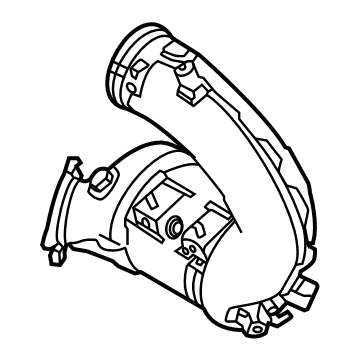
Volvo Catalytic Converter Part Number: 36011645
$1068.28 MSRP: $1437.01You Save: $368.73 (26%)Ships in 1-2 Business Days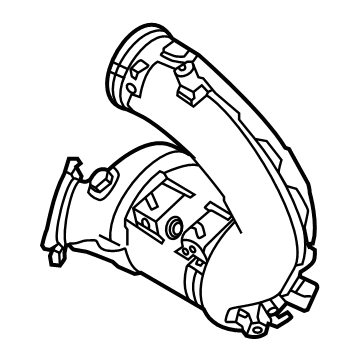
Volvo Catalytic Converter Part Number: 36010608
$985.62 MSRP: $1320.18You Save: $334.56 (26%)Ships in 1-2 Business DaysVolvo Catalytic Converter Part Number: 36010607
$985.62 MSRP: $1320.18You Save: $334.56 (26%)Ships in 1-2 Business Days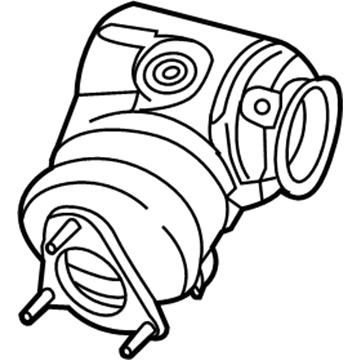
Volvo Catalytic Converter Part Number: 36002059
$985.62 MSRP: $1320.18You Save: $334.56 (26%)Ships in 1-2 Business DaysVolvo Catalytic Converter Part Number: 36011727
$1072.48 MSRP: $1437.01You Save: $364.53 (26%)Ships in 1-2 Business Days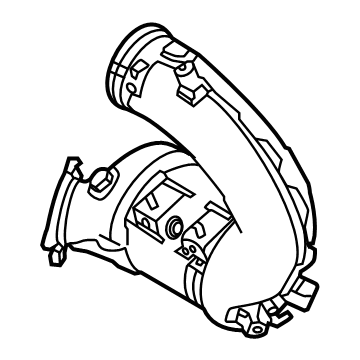
Volvo Catalytic Converter Part Number: 36011644
$1072.48 MSRP: $1437.01You Save: $364.53 (26%)Ships in 1-2 Business Days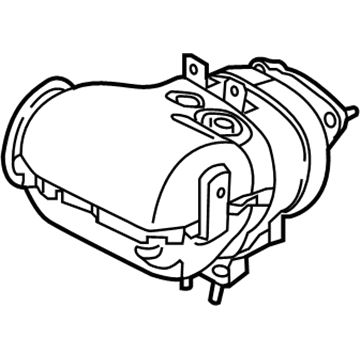
Volvo Catalytic Converter Part Number: 36012613
$1210.40 MSRP: $1622.54You Save: $412.14 (26%)Ships in 1-2 Business Days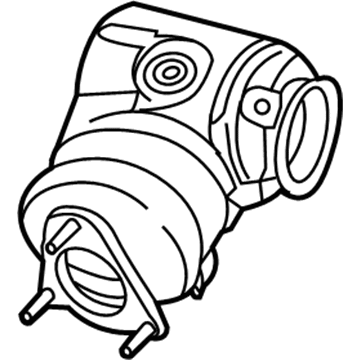
Volvo Catalytic Converter Part Number: 36011374
$1210.40 MSRP: $1622.54You Save: $412.14 (26%)Ships in 1-2 Business DaysVolvo Catalytic Converter Part Number: 36010201
$1210.40 MSRP: $1622.54You Save: $412.14 (26%)Ships in 1-2 Business Days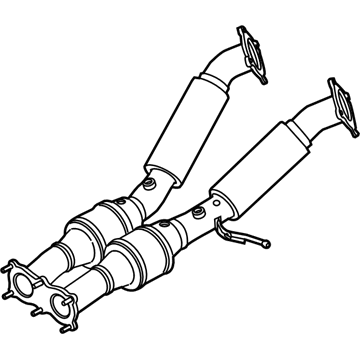
Volvo Catalytic Converter Part Number: 36001277
$1341.71 MSRP: $1799.18You Save: $457.47 (26%)Ships in 1-2 Business DaysProduct Specifications- Other Name: Converter & Pipe
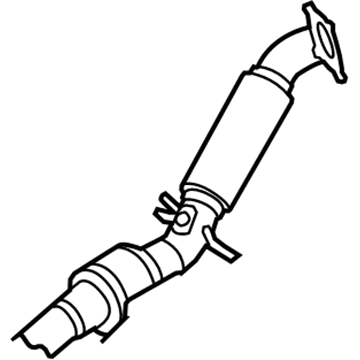
Volvo Catalytic Converter Part Number: 36001276
$1341.71 MSRP: $1799.18You Save: $457.47 (26%)Ships in 1-2 Business DaysProduct Specifications- Other Name: Converter & Pipe
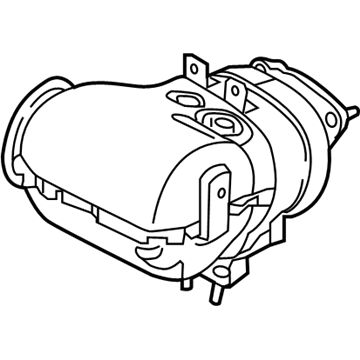
Volvo Catalytic Converter Part Number: 36013619
$1423.89 MSRP: $1909.73You Save: $485.84 (26%)Ships in 1-2 Business DaysVolvo Catalytic Converter Part Number: 36012746
$1423.89 MSRP: $1909.73You Save: $485.84 (26%)Ships in 1-2 Business Days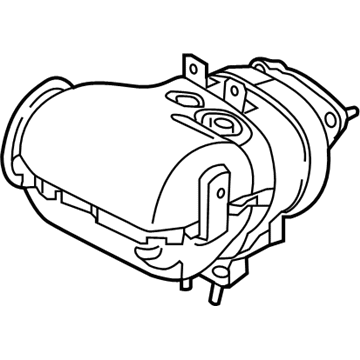
Volvo Catalytic Converter Part Number: 36012664
$1423.89 MSRP: $1909.73You Save: $485.84 (26%)Ships in 1-2 Business Days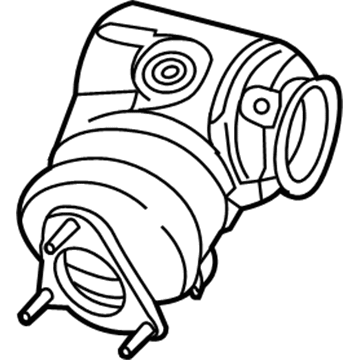
Volvo Catalytic Converter Part Number: 36011375
$1423.89 MSRP: $1909.73You Save: $485.84 (26%)Ships in 1-2 Business DaysVolvo Catalytic Converter Part Number: 36010372
$1423.89 MSRP: $1909.73You Save: $485.84 (26%)Ships in 1-2 Business DaysVolvo Catalytic Converter Part Number: 36010202
$1423.89 MSRP: $1909.73You Save: $485.84 (26%)Ships in 1-2 Business Days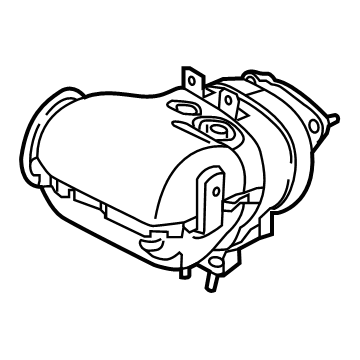
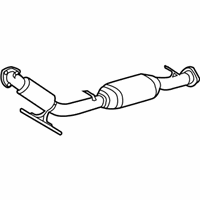
Volvo Catalytic Converter Part Number: 36003042
$1423.89 MSRP: $1909.73You Save: $485.84 (26%)Ships in 1-2 Business DaysVolvo Catalytic Converter Part Number: 36003041
$1423.89 MSRP: $1909.73You Save: $485.84 (26%)Ships in 1-2 Business DaysVolvo Catalytic Converter Part Number: 36011643
$1515.41 MSRP: $2032.84You Save: $517.43 (26%)Ships in 1-2 Business Days
| Page 1 of 5 |Next >
1-20 of 82 Results
Volvo Catalytic Converter
The Volvo Catalytic Converter converts harmful exhaust gases to safer emissions, aiding air quality while furthering the brand's long-standing commitment to safety and responsibility. Volvo made a name for itself on its innovations of the three-point seat belt, intuitive dashboards, and sturdy steel cabins that make drivers feel confident whether they are on city streets or along icy rural roads. Every Volvo is a combination of clean Scandinavian design and modern hybrid powertrains, so passengers enjoy quiet rides, responsive acceleration, and impressive fuel savings without compromising comfort. Active braking systems, intelligent infotainment, and a commitment to using renewable materials are additional examples of how Volvo keeps people and planet in mind with every vehicle that rolls out of Gothenburg. A key ally in that eco-friendly mission is the Catalytic Converter, housed in a stainless steel case under the floorpan and packed with a honeycomb core coated in platinum, palladium, and rhodium. This Catalytic Converter accelerates the chemical reaction of carbon monoxide, unburned hydrocarbons, and nitrogen oxides to carbon dioxide, water, and nitrogen before passing through the tailpipe. Thanks to the honeycomb design, the Catalytic Converter ensures that the exhaust flow stays smooth, reducing back pressure and helping the engine to breathe freely, meaning that the engine powers more steadily and the car has better fuel economy across the entire Volvo range. Durable construction resists heat and vibration, providing peace of mind for owners who think their car is both still spirited and clean for many miles.
Trust OEM Catalytic Converter for quality that holds up. These parts use top-tier materials to keep your ride running smooth. Because they match exact Volvo specs, you get a flawless fit and a hassle-free install every single time. No more fighting with parts that just won't line up. It is easy to search our massive stock of genuine Volvo options at prices you will really like. Every part comes with a real manufacturer's warranty and a simple return policy. Plus, we ship fast to get your order to you. Shop with confidence and give your Volvo the reliability it deserves.
Volvo Catalytic Converter Parts and Q&A
- Q:What are the important considerations for maintaining a catalytic converter on Volvo S40?A:On petrol versions, a three way catalytic converter is used as part of the exhaust manifold and the front part of the exhaust pipe and on diesel versions an oxidation catalytic converter is fitted downstream of the turbocharger. This is a reliable and easy to use device that does not need maintenance, but there are several important considerations that owners should be aware of to ensure optimal functioning over the device's service life. Do not use leaded petrol or LRP as lead will coat the precious metals reducing the efficiency and ultimately destroying the converter. It is important to keep the ignition and fuel systems in accordance with the manufacturer's schedule. If there is a misfire in the engine, avoid driving the vehicle until the problem is fixed. Do not push- or tow-start the vehicle because this may soak the catalytic converter in unburned fuel, causing overheating when the engine starts. Do not turn off the ignition at high engine speeds, do not use additives to fuels and engine oil because they may contain harmful substances. If the engine burns oil to the point of emitting blue smoke that is visible, discontinue using the vehicle. Be aware that the catalytic converter reaches very hot temperatures so do not leave the vehicle parked in dry undergrowth, long grass or piles of dead leaves after a long run. Handle the catalytic converter with care because it is fragile and should not be hit with tools while servicing. A sulphurous odour similar to rotting eggs might be occasionally noticed emanating from the exhaust, which is common in many vehicles fitted with catalytic converters, and this should reduce after a few thousand miles and changing the brand of petrol may improve the problem. A well maintained and driven vehicle should get the catalytic converter to survive between 50,000 and 100,000 miles and if it is no good, it has to be replaced.
- Q:What are the key maintenance and care considerations for catalytic converters on Volvo V70?A:On petrol versions, a three-way catalytic converter is used as part of the front part of the exhaust pipe, whereas diesel versions have two oxidation catalytic converters in the same position. The catalytic converter is a reliable and maintenance free device and owners should be aware of some factors to ensure its proper functioning throughout its service life. For petrol models it is essential to not use leaded petrol or LRP as the lead will coat the precious metals and reduce their efficiency, destroying the converter in the process. Maintaining the timing and fuel systems as per the manufacturer's schedule is crucial. If there is a misfire of the engine, driving should be minimized until the problem is resolved. Pushing or tow-starting the vehicle is to be avoided to avoid unburnt fuel soaking into the catalytic converter which can cause overheating. The ignition should not be switched off at high engine speeds and fuel or engine oil additives that may damage the converter should be avoided. If the engine is burning oil to the point where blue smoke is evident, then the vehicle should not be used. It is important to remember that the catalytic converter operates at very high temperatures, and therefore after a long run it is important to park the vehicle in a dry spot away from the undergrowth, long grass, and piles of dead leaves. The converter is also delicate and should not be hit with any tool while servicing. A sulphurous smell from the exhaust may occur, which is common and should dissipate after a few thousand miles, changing the brand of petrol may help in the meantime. A well maintained catalytic converter should last anywhere from 50,000 to 100,000 miles and if it no longer works, it needs to be replaced. For diesel models, the same precautions as maintenance and care should be taken.
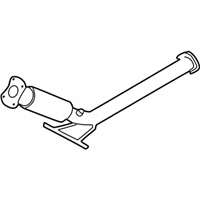
Related Volvo Parts
 Volvo PCV Valve
 Volvo Exhaust Hanger
 Volvo Exhaust Manifold
 Volvo PCV Hose
 Volvo Air Injection Pump
 Volvo Catalytic Converter Gasket
 Volvo EGR Tube
 Volvo Exhaust Heat Shield
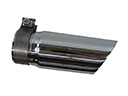 Volvo Exhaust Tip
 Volvo Muffler Strap
 Volvo Secondary Air Injection Check Valve
 Volvo Vapor Canister
Browse by Model
244 Catalytic Converter 245 Catalytic Converter 740 Catalytic Converter 760 Catalytic Converter 780 Catalytic Converter 850 Catalytic Converter 940 Catalytic Converter C30 Catalytic Converter C70 Catalytic Converter S40 Catalytic Converter S60 Catalytic Converter S60 Cross Country Catalytic Converter S70 Catalytic Converter S80 Catalytic Converter S90 Catalytic Converter V50 Catalytic Converter V60 Catalytic Converter V60 Cross Country Catalytic Converter V70 Catalytic Converter V90 Catalytic Converter V90 Cross Country Catalytic Converter XC40 Catalytic Converter XC60 Catalytic Converter XC70 Catalytic Converter XC90 Catalytic Converter