×
- Hello
- Login or Register
- Quick Links
- Live Chat
- Track Order
- Parts Availability
- RMA
- Help Center
- Contact Us
- Shop for
- Volvo Parts

My Garage
My Account
Cart
Genuine Volvo V50 Wheel Bearing
Hub Bearing- Select Vehicle by Model
- Select Vehicle by VIN
Select Vehicle by Model
orMake
Model
Year
Select Vehicle by VIN
For the most accurate results, select vehicle by your VIN (Vehicle Identification Number).
4 Wheel Bearings found
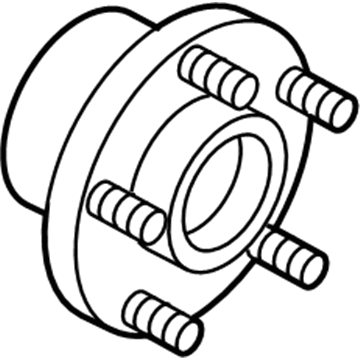
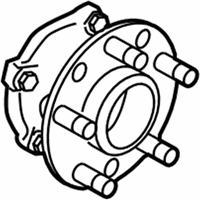
Volvo V50 Front Hub & Bearing Part Number: 31262950
$198.84 MSRP: $301.27You Save: $102.43 (34%)Ships in 1-2 Business Days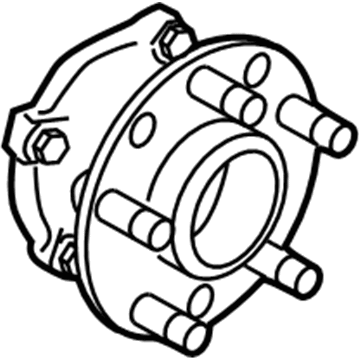
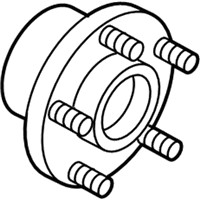
Volvo V50 Hub & Bearing, Rear Part Number: 31340686
$251.09 MSRP: $380.44You Save: $129.35 (34%)Ships in 1-2 Business Days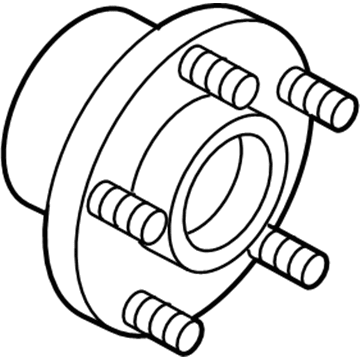
Volvo V50 Hub Assembly, Front Part Number: 31340604
$273.08 MSRP: $413.77You Save: $140.69 (34%)Ships in 1-2 Business Days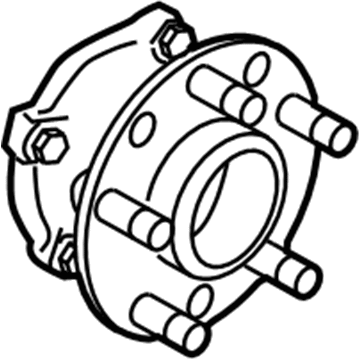
Volvo V50 Hub & Bearing, Rear Part Number: 31277045
$368.10 MSRP: $438.22You Save: $70.12 (16%)Ships in 1-2 Business Days
Volvo V50 Wheel Bearing
The Volvo V50 Wheel Bearing causes the wheels to move smoothly without a lot of resistance, hence steering is accurate and noise on the road is minimal. The hub contains a ring of hardened steel balls or occasionally tapered rollers that rotate freely and safely around a metal race, reducing friction so that the wheel and tire combination can freely rotate. The hub in itself is clamped onto the suspension and the Wheel Bearing concealed inside is thus important to the ride and braking response of all Volvo compact estates. There are three styles of bearing that occur throughout the production run of the model. The common is the integral hub and bearing unit, which is a sealed cartridge frequently housing an ABS sensor, so that when service time comes the whole unit on an axle in the front of a V50 is replaced, not rebuilt. Other front designs on Volvo front wheel drive systems still need the steering knuckle taken out and a press applied to part the hub and put the new cartridge back in. In the rear non-driven configuration, subsequent models have opposed tapered roller bearings which are mounted in a cleanable, greasable, removable race with a more traditional but adjustable solution. The highly important difference between the sealed unit and the tapered style lies in serviceability; the first one is more focused on easy replacement and factory preload, whereas the second type of unit can be overhauled but requires an exact torque. Regardless of the design installed, a healthy Wheel Bearing protects against vibrations, lumpy tire tears and expensive suspension damage on all Volvo journeys.
OEM parts are the only choice for top quality and real functionality. They pass strict checks, and they match Volvo's factory specs, so installation is easy. If you need new Wheel Bearing and you want quality and fit. You will find both here. Our site has a wide range of OEM Volvo V50 parts. The prices are unbeatable, allowing you to get value for money. Each genuine V50 Wheel Bearing comes with the manufacturer's warranty. That gives you peace of mind. We ship fast to your door. Order today, and enjoy a smooth, no-hassle upgrade with parts that fit right.
Volvo V50 Wheel Bearing Parts and Q&A
- Q:How to replace the wheel bearings in the rear hub on Volvo V50?A:The wheel bearings are delivered in a complete assembly and cannot be renewed individually. Remove the brake disc and then undo the brake bolt to remove the ABS wheel speed sensor from the hub carrier. Then undo the four Torx bolts to take the bearing assembly off the hub carrier. After that, insert the new assembly onto the hub carrier, and insert and tighten the bolts to the specified torque. Finally, reattach the ABS wheel speed sensor and brake disc.
- Q:How to remove and refit a sealed hub bearing assembly on Steering Knuckle and front Wheel Bearing on Volvo V50?A:The hub bearing is a sealed, pre-adjusted and prelubricated double-row, ball type, and designed to last the entire service life of the car without maintenance. The hub flange and bearing are serviced in a complete assembly which cannot be dismantled or renewed separately. To remove the hub assembly, slacken the retaining bolt of the driveshaft, then undo the wheel nuts, then raise and support the front of the car and remove the roadwheel. Next, remove the driveshaft retaining bolt (discard it for a new one when reassembling) followed by the front brake disc and the four bolts that hold the brake backplate. Disconnect the steering track rod end balljoint to the hub carrier by means of a separator tool if needed, remove ABS wheel sensor by disconnecting the wiring plug and undoing the Torx screw. Remove the suspension control arm balljoint from the hub carrier, taking care not to rotate it with an Allen key, and carefully lever the control arm downwards to pivot the hub carrier over the balljoint shank. To remove the driveshaft CV joint from the hub flange, swivel the hub carrier assembly outwards, remove the bolt for the hub carrier to be secured to the Shock Absorber, and spread the hub carrier out in a slight degree with a flat-blade tool while tapping it downwards. The hub and bearing need to be removed from the hub carrier as an assembly, and to press them into the hub carrier new hub/bearing requires special tools as it cannot be reused once removed from the carrier. For refitting, remove all traces of metal adhesive, rust, oil and dirt from the driveshaft outer CV joint and bearing housing mating surfaces, making sure that the hub and brake disc mating faces are spotless and aligned with orientation marks. Use a new driveshaft retaining screw and ensure the ABS sensor and its position are clean and all the nuts and bolts are ticked up to the specified torque.
Related Volvo V50 Parts
 Volvo V50 Axle Beam
 Volvo V50 Axle Beam Mount
 Volvo V50 Axle Support Bushings
 Volvo V50 Front Cross-Member
 Volvo V50 Radius Arm
 Volvo V50 Shock and Strut Boot
 Volvo V50 Steering Knuckle
 Volvo V50 Sway Bar Bracket
 Volvo V50 Sway Bar Link Bushing
 Volvo V50 Sway Bars
 Volvo V50 Trailing Arm
 Volvo V50 Trailing Arm Bushing