×
- Hello
- Login or Register
- Quick Links
- Live Chat
- Track Order
- Parts Availability
- RMA
- Help Center
- Contact Us
- Shop for
- Volvo Parts

My Garage
My Account
Cart
Genuine Volvo V50 Alternator
Generator- Select Vehicle by Model
- Select Vehicle by VIN
Select Vehicle by Model
orMake
Model
Year
Select Vehicle by VIN
For the most accurate results, select vehicle by your VIN (Vehicle Identification Number).
2 Alternators found
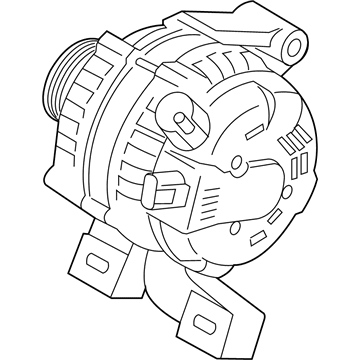
Volvo V50 Alternator Part Number: 8602920
$536.31 MSRP: $708.57You Save: $172.26 (25%)Ships in 1-2 Business Days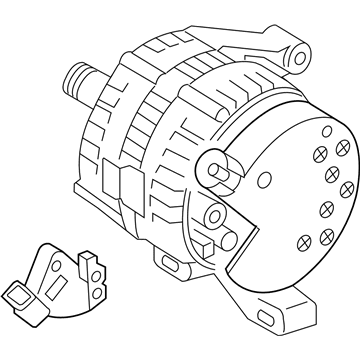
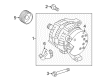
Volvo V50 Alternator Part Number: 36001497
$536.73 MSRP: $708.57You Save: $171.84 (25%)Ships in 1-2 Business Days
Volvo V50 Alternator
The Volvo V50 Alternator maintains battery power in the compact wagon by turning the engine's rotation into a constant stream of electricity powering all of the lights, screens, and sensors as you drive. The stator is fixedly mounted, and a shaft-mounted rotor is fitted inside a two-piece aluminum shell, the rotor shaft being turned by a belt attached to a crankshaft. As the pulley pulls the magnetic field of the rotor past the windings on the stator, alternating currents flow, and the diodes in the built-in rectifier transform that output into direct current such that the battery and the whole electrical system receive a clean 12-volt supply. The housing is also home to cooling fans, front and rear bearings, brushes, and a voltage regulator, all of which serve to maintain high amperage and low heat levels. Such a strong layout indicates Volvo requirements for durability and security. Initial Volvo V50 models adhered to the long-standing car industry convention of having an internal regulator that changed field current automatically; however, in subsequent model years the powertrain control module was left to do that task, enabling it to provide more accurate control and additional protection against being under or overcharged during heavy part operation. The Alternator styles, notwithstanding the year, have a similar core layout but vary only in the way they handle voltage. Due to this development, owners are assured of consistent charging whether the car is in the city on stop and go or highway mode, as long as the current Alternator remains well-belted and cooled in all Volvo vehicles built on the flexible P1 platform, which includes the always enthusiastic wagon twin.
OEM parts are the only choice for top quality and real functionality. They pass strict checks, and they match Volvo's factory specs, so installation is easy. If you need new Alternator and you want quality and fit. You will find both here. Our site has a wide range of OEM Volvo V50 parts. The prices are unbeatable, allowing you to get value for money. Each genuine V50 Alternator comes with the manufacturer's warranty. That gives you peace of mind. We ship fast to your door. Order today, and enjoy a smooth, no-hassle upgrade with parts that fit right.
Volvo V50 Alternator Parts and Q&A
- Q:How to remove and refit the alternator on Volvo V50?A:To take the alternator off, you have to start by disconnecting the battery negative lead and removing the auxiliary drivebelt. For 1.8 and 2.0 litre petrol engines remove the plastic cover on top of the engine, undo the alternator upper mounting bolt and raise the vehicle securely on axle stands and if applicable remove the engine undershield by undoing the 7 Torx screws. Disconnect the wiring plugs and lead from the terminal stud at the rear of the alternator and undo the 2 lower mounting bolts then lift out the alternator. For 2.4 litre petrol engines, jack up the front of the vehicle, remove the right hand front roadwheel, and remove the wheel arch liner. Disconnect the wiring plug and lead from the terminal stud located at the rear of the alternator, and remove the retaining bolts and alternator. For the 1.6 litre diesel engine (80kW), disconnect the sensor wiring plugs, undo the retaining bolts and remove the air inlet tube/anti-shudder valve taking the seal if needed. Slacken the clamps, disconnect the air inlet pipes, undo the retaining bolts and the throttle body assembly will come off. For the 1.6 litre diesel engine (85 kW) - pull the plastic cover upwards to release it, slacken the clamps, undo the nut and bolt securing the retaining bracket and remove the flexible section of air pipe next to the throttle body. Remove the throttle body, move any air pipes and pieces of the wiring harness that are left aside, un-clip the wiring harness from the bracket on top of the alternator, disconnect the two wiring plugs, undo the 3 bolts, and remove the tensioner for the auxiliary drivebelt and the bracket on top of the alternator. Slacken and remove the bolts on the air conditioning compressor without disconnecting the refrigerant lines and then manoeuvre the alternator past the air conditioning compressor to remove it. For 2.0 litre 4-cylinder models, undo the bolts and take the cover away over the fuel filter assembly, detach the wiring plug, undo the screw and pull the fuel filter out of its position with the hoses attached to it. Remove the lower filter bracket/protective cover to disconnect the wiring plugs located on the alternator and finally remove the bolts which hold the alternator in place. For 5-cylinder engines, take the plastic cover on top of the engine upwards, slacken the clamp for the outlet pipe from the air cleaner housing, and remove the air pipe at front bottom of the engine. Disconnect the alternator B+ wire and control wiring plug and remove the mounting bolts and the alternator. Refitting involves a reverse of removal being sure to tighten the various fasteners to the specified torque where applicable.