×
- Hello
- Login or Register
- Quick Links
- Live Chat
- Track Order
- Parts Availability
- RMA
- Help Center
- Contact Us
- Shop for
- Volvo Parts

My Garage
My Account
Cart
Genuine Volvo S40 Relay Boxes
Relay Block- Select Vehicle by Model
- Select Vehicle by VIN
Select Vehicle by Model
orMake
Model
Year
Select Vehicle by VIN
For the most accurate results, select vehicle by your VIN (Vehicle Identification Number).
4 Relay Boxes found

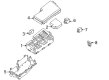
Volvo S40 Fuse Holder Part Number: 31110064
$28.73 MSRP: $36.80You Save: $8.07 (22%)Ships in 1-2 Business Days

Volvo S40 Relay Box Part Number: 30870947
$33.29 MSRP: $38.98You Save: $5.69 (15%)Ships in 1-2 Business Days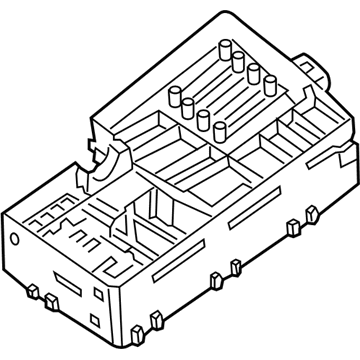
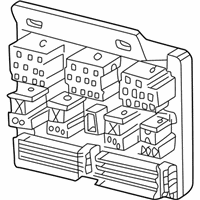
Volvo S40 Fuse & Relay Box Part Number: 8688040
$72.18 MSRP: $92.48You Save: $20.30 (22%)Ships in 1-2 Business Days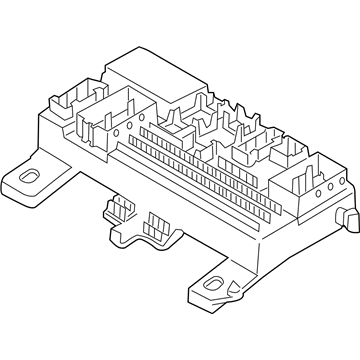
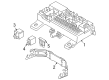
Volvo S40 Fuse & Relay Box Part Number: 31327215
$802.99 MSRP: $1063.28You Save: $260.29 (25%)Ships in 1-2 Business Days
Volvo S40 Relay Boxes
OEM parts are the only choice for top quality and real functionality. They pass strict checks, and they match Volvo's factory specs, so installation is easy. If you need new Relay Boxes and you want quality and fit. You will find both here. Our site has a wide range of OEM Volvo S40 parts. The prices are unbeatable, allowing you to get value for money. Each genuine S40 Relay Boxes comes with the manufacturer's warranty. That gives you peace of mind. We ship fast to your door. Order today, and enjoy a smooth, no-hassle upgrade with parts that fit right.
Volvo S40 Relay Boxes Parts and Q&A
- Q: Where can you find Fuse Box and Relay Boxes, and how should they be handled when blown or faulty on Volvo S40?A:Fuses can be found in the central fusebox (on the left side of the engine compartment) and in the Central Electrical Module (CEM) (underneath the glovebox). If a fuse blows, the electrical circuits protected by that fuse will not be able to function, with particular fuse locations and protected circuits depending on the vehicle specification, model year and country. To remove a fuse, turn off the ignition, remove the fusebox cover or lower the CEM and use the provided plastic removal tool to pull out the fuse in question - an indication of a blown fuse is a broken or melted wire inside. Always replace a blown fuse with one of the same rating to prevent fire hazards and avoid replacing a fuse several times without having to identify the underlying problem. Persistent fuse blowing indicates a fault in the protected circuit and troubleshooting can be done by switching on things one at a time to isolate the problem. A blown fuse could also occur due to a short circuit in the wiring, so look for trapped or frayed wires and damaged connectors. Only blade-type fuses should be replaced by DIY mechanics, and blown large fusible links are a good indication of serious electrical faults that require professional diagnosis. Relays are electrically-operated switches that provide the ability to switch heavy currents remotely, to have multiple control inputs, and to provide timer functions. If there is a fault in a relay circuit, then the relay itself is possibly at fault; a simple check to do this is to listen for a click when the item is switched on. Most relays have four or five terminals that supply current and output, and testing should be done so that all connections will produce the expected voltage. Substitution with a known good relay is the ultimate test, however, caution is required because it is possible that similar looking relays are not identical. Relays are found in the fusebox on the passenger side on the engine compartment and in the CEM and to remove a relay, be sure the ignition is off before removing the relay from its socket and firmly pushing in the new relay to re-fit.
Related Volvo S40 Parts
 Volvo S40 Camshaft Position Sensor
 Volvo S40 Fuse Box
 Volvo S40 Oxygen Sensor
 Volvo S40 Throttle Position Sensor
 Volvo S40 Coolant Temperature Sensors
 Volvo S40 Crankshaft Position Sensor
 Volvo S40 Daytime Running Light Relay
 Volvo S40 Engine Control Module
 Volvo S40 Junction Boxes
 Volvo S40 Knock Sensor
 Volvo S40 Spark Plug
 Volvo S40 Spark Plug Wire