×
- Hello
- Login or Register
- Quick Links
- Live Chat
- Track Order
- Parts Availability
- RMA
- Help Center
- Contact Us
- Shop for
- Volvo Parts

My Garage
My Account
Cart
Genuine Volvo 760 Cam Gear
Camshaft Gear- Select Vehicle by Model
- Select Vehicle by VIN
Select Vehicle by Model
orMake
Model
Year
Select Vehicle by VIN
For the most accurate results, select vehicle by your VIN (Vehicle Identification Number).
3 Cam Gears found

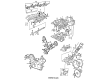
Volvo 760 Camshaft Gear Part Number: 245082
$78.57 MSRP: $92.75You Save: $14.18 (16%)Ships in 1-2 Business Days
Volvo 760 Drive Gear Part Number: 1257166
$77.46 MSRP: $91.46You Save: $14.00 (16%)Ships in 1-2 Business DaysVolvo 760 Camshaft Gear Part Number: 247955
$43.63 MSRP: $51.08You Save: $7.45 (15%)Ships in 1-2 Business Days
Volvo 760 Cam Gear
OEM parts are the only choice for top quality and real functionality. They pass strict checks, and they match Volvo's factory specs, so installation is easy. If you need new Cam Gear and you want quality and fit. You will find both here. Our site has a wide range of OEM Volvo 760 parts. The prices are unbeatable, allowing you to get value for money. Each genuine 760 Cam Gear comes with the manufacturer's warranty. That gives you peace of mind. We ship fast to your door. Order today, and enjoy a smooth, no-hassle upgrade with parts that fit right.
Volvo 760 Cam Gear Parts and Q&A
- Q:What are the essential steps and considerations for replacing the cam gear and timing belt on Volvo 760?A:The timing system is very complex and serious engine damage can occur when mistakes are made so only experienced individuals should attempt this procedure. Before starting the engine, turn the crankshaft by hand at least two complete turns, if there is any resistance, stop immediately to find the problem, because here may be valve and piston contact. It is recommended to replace the timing belt tensioner when replacing the timing belt because the tensioner may leak hydraulic fluid or seize causing a timing belt failure. For B23QF and B230FT engines, disconnect the negative battery cable, remove the timing belt cover, TDC the engine with respect to the No. 1 cylinder, loosen the tensioner nut and remove the timing belt carefully. When installing, make sure to align all of the shafts with their corresponding index marks and install the new belt without sharp tools and check that the timing marks align by rotating the crankshaft. For the B234F engine with two timing belts, follow similar steps being careful with the exact placement of belts and pulleys. For the 2.9L 6-cylinder engine, disconnect the battery, remove required engine covers and belts, align timing marks, and inspect the tensioner and idler pulleys before placing the new belt. For 2.3L and 2.4L 5 cylinder engines, follow a similar steps, taking care of tension and alignment. Adjustments for the B234F engine include a tension gauge to make sure the tension is correct, and the 2.9L engine has similar requirements. Regular inspection of the timing belt for wear and contamination is very important because if there is any indication of wear and debris, it will cause wear and tear of the timing belt very quickly and may cause engine failure. Following the manufacturer's recommended intervals for replacement is vital to ensure the health of the engine.
Related Volvo 760 Parts
 Volvo 760 Crankshaft Pulley
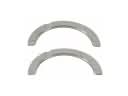 Volvo 760 Crankshaft Thrust Washer
 Volvo 760 Cylinder Head
 Volvo 760 Cylinder Head Gasket
 Volvo 760 Engine Mount
 Volvo 760 Harmonic Balancer
 Volvo 760 Oil Filter
 Volvo 760 Oil Pan Gasket
 Volvo 760 Pilot Bearing
 Volvo 760 Rod Bearing
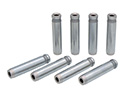 Volvo 760 Valve Guide
 Volvo 760 Valve Seat