×
- Hello
- Login or Register
- Quick Links
- Live Chat
- Track Order
- Parts Availability
- RMA
- Help Center
- Contact Us
- Shop for
- Volvo Parts

My Garage
My Account
Cart
Genuine Volvo V40 Exhaust Manifold
Engine Exhaust Manifold- Select Vehicle by Model
- Select Vehicle by VIN
Select Vehicle by Model
orMake
Model
Year
Select Vehicle by VIN
For the most accurate results, select vehicle by your VIN (Vehicle Identification Number).
1 Exhaust Manifold found
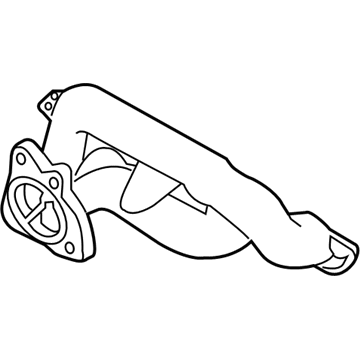
Volvo V40 Exhaust Manifold Part Number: 9497861
$575.87 MSRP: $685.56You Save: $109.69 (16%)Ships in 1-2 Business Days
Volvo V40 Exhaust Manifold
OEM parts are the only choice for top quality and real functionality. They pass strict checks, and they match Volvo's factory specs, so installation is easy. If you need new Exhaust Manifold and you want quality and fit. You will find both here. Our site has a wide range of OEM Volvo V40 parts. The prices are unbeatable, allowing you to get value for money. Each genuine V40 Exhaust Manifold comes with the manufacturer's warranty. That gives you peace of mind. We ship fast to your door. Order today, and enjoy a smooth, no-hassle upgrade with parts that fit right.
Volvo V40 Exhaust Manifold Parts and Q&A
- Q:How to remove the Exhaust Manifold on Volvo V40?A:To remove the components from non-GDI engines, first disconnect the battery negative lead then undo the securing screws and remove the cover panel from the top of the engine. For turbo models, remove the Turbocharger and then the air cleaner assembly and hot air inlet duct from the manifold heat shield. Next, undo the bolts holding the heat shields to the exhaust manifold and the engine compartment bulkhead, maneuvering the heat shields out from behind the engine, making note of the limited clearance. Jack up the front of the car and place it on axle stands, undo the nuts holding the exhaust front pipe flange to the manifold and recover the tension springs (if fitted) Lower the car to the ground and undo the nuts and spring-loaded bolts that hold the manifold to the cylinder head starting with the innermost nuts. Move the manifold backwards off the cylinder head studs, pull the front pipe flange joint, pivot the manifold through 90 degrees to the right and force it out the back of the engine, careful because of the limited space. Recover the front pipe flange joint gasket or sealing ring, individual manifold to cylinder head gaskets. For GDI engines, the process starts out much the same with battery disconnection and manipulation of the cover panel followed by the disconnection of the downpipe from the manifold. Remove bolts holding heat shield over manifold, taking good fit tool and penetration lubricant to possible corrosion damage. Take out the two bolts from underneath holding the manifold to the cylinder block mounting bracket, then remove the nuts and washers holding the manifold to the cylinder head and slide the manifold off the studs and recover the gasket for replacement (during refitting). If any studs were removed they can be refitted using two nuts tightened against each other with the recommendation to use thread locking fluid for any studs that need to be renewed. Refitting includes working backward and ensuring to put any studs back into the cylinder head with thread locking fluid, thoroughly cleaning the mating faces of the manifold and cylinder head and using new gaskets for the manifold head and the front pipe-to-manifold joint (a new sealing ring or flange gasket), refitting the turbocharger and tightening the nuts and bolts to recommended torque.
Related Volvo V40 Parts
 Volvo V40 Canister Purge Valve
 Volvo V40 Catalytic Converter Gasket
 Volvo V40 Exhaust Flange Gasket
 Volvo V40 Exhaust Manifold Gasket
 Volvo V40 Exhaust Nut
 Volvo V40 Exhaust Pipe
 Volvo V40 Exhaust Tip
 Volvo V40 Leak Detection Pump
 Volvo V40 PCV Hose
 Volvo V40 Secondary Air Injection Check Valve
 Volvo V40 Tail Pipe
 Volvo V40 Vapor Canister