×
- Hello
- Login or Register
- Quick Links
- Live Chat
- Track Order
- Parts Availability
- RMA
- Help Center
- Contact Us
- Shop for
- Volvo Parts

My Garage
My Account
Cart
Genuine 2005 Volvo V50 Oil Pan
Oil Drain Pan- Select Vehicle by Model
- Select Vehicle by VIN
Select Vehicle by Model
orMake
Model
Year
Select Vehicle by VIN
For the most accurate results, select vehicle by your VIN (Vehicle Identification Number).
1 Oil Pan found
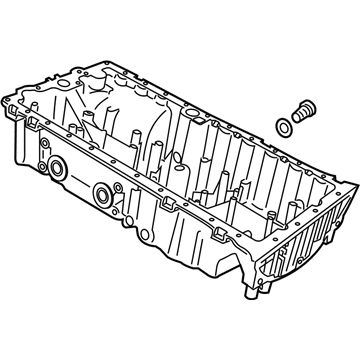

2005 Volvo V50 Oil Pan Part Number: 30777739
$617.69 MSRP: $817.92You Save: $200.23 (25%)Ships in 1-2 Business DaysProduct Specifications- Other Name: Engine Oil Pan
- Condition: New
- Fitment Type: Direct Replacement
- SKU: 30777739
- Warranty: This genuine part is guaranteed by Volvo's factory warranty.
2005 Volvo V50 Oil Pan Parts and Q&A
- Q: How to remove and refit the oil pan for 2.0 and 2.4 litre 5-cylinder diesel engine on 2005 Volvo V50?A: To remove the engine oil pan, first jack up the front of the vehicle and support it securely on axle stands. Next, undo the screws to remove the engine undershield, then drain the engine oil. Remove the auxiliary drive belt and undo the three bolts to move the air conditioning compressor aside, securing it with wire. Pull the oil level dipstick guide tube from the oil pan after undoing the bolt/nut, then disconnect the wiring plug, undo three bolts, and remove the oil level sensor from the oil pan. If an oil cooler is fitted, undo the four bolts securing it to the oil pan and pull it to the rear, being prepared for oil spillage. Remove the charge air pipe below the oil pan by undoing the clips and the bolt securing the mounting bracket. Slacken the bolts securing the oil pan, removing all but one bolt in each corner. Gently tap the sides and ends of the oil pan until it releases, then undo the remaining bolts and remove the oil pan, discarding the O-rings at the right-hand end/front edge. For refitting, clean the contact faces of the oil pan and block, apply a thin and even layer of Volvo sealant to the oil pan mating face, and position new O-ring seals on the engine block face, ensuring the oil pan is refitted within five minutes of applying the sealant. Refit the oil pan casing and retaining bolts, tightening them finger-tight initially, noting that the three longest bolts go to the oil pump end and the four slightly shorter bolts to the transmission end. Refit and tighten the oil pan-to-transmission bolts to the specified torque, then starting from the transmission end, tighten the oil pan-to-engine bolts in pairs to the specified torque. Complete the refitting by renewing the oil cooler-to-oil pan O-ring seals, tightening all fasteners to their specified torque, fitting a new engine oil filter, and refilling the engine with oil, with a recommendation to wait a minimum of two hours before starting the engine to allow the sealant to cure fully.
Related 2005 Volvo V50 Parts
 2005 Volvo V50 Oil Filter
 2005 Volvo V50 Oil Filter Housing
 2005 Volvo V50 Cylinder Head
 2005 Volvo V50 Harmonic Balancer
 2005 Volvo V50 Idler Pulley
 2005 Volvo V50 Oil Dipstick Tube
 2005 Volvo V50 Oil Drain Plug
 2005 Volvo V50 Piston
 2005 Volvo V50 Rod Bearing
 2005 Volvo V50 Valve Spring
 2005 Volvo V50 Valve Spring Retainer
 2005 Volvo V50 Valve Stem Oil Seal